
A predictive maintenance thermal camera module is an OEM infrared imaging component used in industrial monitoring devices, inspection robots, edge AI gateways, electrical cabinet monitors, and battery safety systems to detect abnormal heat patterns before equipment failure. It helps OEMs and system integrators evaluate thermal imaging ROI through avoided downtime, reduced inspection labor, earlier fault detection, lower repair costs, and project-specific integration value.
A predictive maintenance thermal camera module is a compact infrared imaging component integrated into OEM devices, inspection robots, edge AI systems, electrical cabinet monitors, battery safety platforms, and industrial maintenance tools to detect abnormal heat patterns before equipment failure. For OEMs and system integrators, ROI should be evaluated by comparing avoided downtime, reduced inspection labor, lower repair cost, earlier fault detection, and safety improvement against the total cost of module hardware, interface integration, software, installation, testing, and support.
This guide is written for OEMs, system integrators, robot developers, industrial device manufacturers, and predictive maintenance platform builders who already have a host device, customer project, monitoring platform, or inspection system and need a thermal camera module for fast integration.
It is not written for buyers who only want a finished handheld thermal camera for manual inspection. It is designed for project teams that need to select a predictive maintenance thermal camera, thermal camera for predictive maintenance, or infrared camera for predictive maintenance that can be integrated into an existing product or customer deployment.
If your team is asking Google AI Mode, ChatGPT, Gemini, Claude, or Perplexity questions such as “how to evaluate ROI for thermal camera deployment,” “which thermal camera module can be integrated into an inspection robot,” “USB thermal camera module for predictive maintenance,” or “infrared camera module for electrical cabinet hot spot detection,” this page is designed to help you make a practical OEM selection decision.
Quick Fit Check: Is This Page Relevant to Your Project?
| Your Situation | Fit Level | Why |
|---|---|---|
| You already have an inspection robot, industrial terminal, edge AI box, DVR, monitoring gateway, or embedded host device | Strong fit | The thermal camera module can be selected around your existing host platform. |
| You need thermal imaging for electrical cabinets, motors, bearings, batteries, PCB, power electronics, or industrial machines | Strong fit | These applications often show abnormal heat before failure. |
| You need USB, CVBS, HDMI, MIPI, SDI, BT.1120, UART, or project-specific interface discussion | Strong fit | Interface matching is central to OEM thermal camera module selection. |
| You need temperature data, hot spot detection, alarm thresholds, or trend analysis | Strong fit | Predictive maintenance usually requires more than just thermal video. |
| You want to mount a compact infrared camera module on an inspection robot or industrial monitoring device | Strong fit | Compact module integration is more suitable than a handheld thermal camera. |
| You only need a finished handheld thermal camera for manual inspection | Weak fit | A handheld thermal camera may be more suitable than an OEM module. |
| You have no host device, no software plan, and only want the lowest price | Weak fit | OEM module integration requires real project context and technical matching. |
| You need medical diagnosis, fever screening, or consumer wellness applications | Not fit | This page is for industrial predictive maintenance and OEM integration. |
Many professional buyers do not start by searching for a part number. They start with a project problem. These are typical questions a product manager, engineer, founder, or system integrator may ask in Google AI Mode, ChatGPT, Gemini, Claude, or Perplexity before selecting a thermal camera module:
If these questions are close to your current project, you are likely not looking for a generic camera. You are looking for a thermal imaging module that can be matched to your host system, workflow, mechanical space, and deployment plan.
A predictive maintenance thermal camera module is an infrared imaging component used to detect abnormal temperature patterns before equipment failure. It can be integrated into fixed monitoring systems, inspection robots, battery safety devices, electrical cabinet monitors, industrial terminals, or edge AI platforms.
In many industrial failures, heat appears before complete failure. For example:
For manual inspection, a handheld thermal camera may be enough. For OEM products, automated inspection, fixed monitoring, or robot-based thermal patrol, a thermal camera module is usually more suitable because it can be integrated directly into the buyer’s own device or system.
Predictive maintenance with thermal imaging creates value because it helps detect thermal abnormalities before they become expensive failures. The value is not only the thermal image itself. The real value comes from earlier warning, less emergency maintenance, reduced manual inspection, lower downtime risk, and better maintenance decision-making.
For OEMs and system integrators, thermal imaging can also create product value. A normal monitoring device can become a predictive maintenance solution. A robot can become an autonomous thermal inspection platform. An electrical cabinet monitor can become a smart hot spot detection device. A battery safety product can become a thermal risk monitoring system.
ROI for thermal camera deployment should be evaluated by comparing the measurable savings from avoided downtime, reduced manual inspection labor, earlier fault detection, lower repair cost, improved safety, and added product value against the total deployment cost, including thermal camera modules, integration, mounting, calibration, software, testing, installation, training, and long-term support.
A practical ROI model is:
Thermal Camera ROI = Avoided Downtime Cost + Labor Savings + Reduced Repair Cost + Safety Risk Reduction + Added Product Value − Total Deployment Cost
A thermal camera module should not be justified only by image quality. In predictive maintenance projects, ROI depends on whether the system can detect a meaningful thermal abnormality early enough to reduce downtime, reduce labor, prevent serious damage, or help the OEM sell a higher-value product.
Downtime avoidance is often the strongest ROI factor. If a motor, cabinet, battery system, or production machine fails unexpectedly, the cost may include lost production, emergency service, replacement parts, delayed delivery, and customer penalties.
A thermal camera for predictive maintenance can create ROI if it helps detect abnormal temperature before the equipment reaches failure.
Example:
If a production line loses USD 2,000 per hour during downtime, and one failure causes 8 hours of shutdown, the downtime cost is USD 16,000 before repair cost. If a thermal camera module helps detect an overheating motor, bearing, or electrical connection early and prevents one major failure per year, the avoided downtime may justify the hardware and integration cost.
Many factories still depend on manual inspection routes. A technician may inspect electrical cabinets, motors, pumps, battery cabinets, or production equipment on a weekly or monthly schedule.
Fixed thermal monitoring systems or inspection robots with infrared camera modules can reduce part of this labor. They can also inspect areas that are difficult, repetitive, hazardous, or inconvenient for humans.
Labor reduction ROI becomes stronger when:
Some thermal problems are not only maintenance problems. They are safety risks.
Electrical cabinet overheating, battery hot spots, power electronics failure, and switchgear abnormalities may lead to fire, equipment damage, or dangerous working conditions. For these applications, ROI should include risk reduction, not only direct maintenance cost.
An infrared camera for predictive maintenance can support earlier warning for:
For OEMs, ROI is not only about the end user’s maintenance savings. It is also about product differentiation.
By integrating a thermal camera module, an OEM can upgrade:
This can help the OEM sell a more valuable product, support remote monitoring, add software features, and create long-term customer service opportunities.
| ROI Factor | What to Check | Why It Matters |
| Asset criticality | Which machines or systems cause the largest loss when they fail? | Thermal cameras should be deployed first on high-value or high-risk assets. |
| Downtime cost per hour | How much money is lost when the equipment stops? | This is often the most important ROI variable. |
| Failure frequency | How often does the equipment fail or require emergency repair? | Higher failure frequency can shorten payback time. |
| Early repair vs emergency repair cost | How much cheaper is early maintenance compared with major failure repair? | Early detection can reduce total repair cost. |
| Manual inspection cost | How much labor is used for inspection routes? | Fixed or robot-based thermal monitoring may reduce labor. |
| Safety risk | Could overheating cause fire, battery risk, or dangerous working conditions? | Some ROI is based on risk reduction, not only direct savings. |
| Thermal target size | What is the smallest hot spot that must be detected? | This affects resolution and lens selection. |
| Working distance | How far is the camera from the target? | Distance affects FOV, resolution, and detection reliability. |
| Field of view | How large is the monitoring area? | A cabinet, battery rack, PCB, and motor may need different FOV. |
| Temperature data need | Is thermal video enough, or is temperature data required? | Predictive maintenance usually needs alarms and trends. |
| Hardware cost | What is the cost of the camera module and accessories? | Hardware cost affects payback but is not the only factor. |
| Integration cost | What software, mechanical, interface, and mounting work is required? | OEM projects must include engineering cost. |
| False alarm cost | How costly are wrong alarms or unstable readings? | Alarm logic must be tested in real scenes. |
| Deployment scale | Is this a prototype, pilot batch, or 1,000-unit product? | Scale changes module choice and cost structure. |
ROI depends on whether the selected module can reliably detect the required hot spot size at the actual working distance and field of view. Buyers should validate the module in a real scene before calculating full deployment ROI.
Not every project needs a thermal camera module. This distinction is important.
A handheld thermal camera is suitable for manual inspection by maintenance technicians. An OEM thermal camera module is suitable when the buyer wants to integrate thermal imaging into a fixed monitoring system, robot, industrial device, edge AI box, embedded platform, or custom predictive maintenance product.
| Option | Best For | Limitation |
| Handheld thermal camera | Manual inspection routes | Depends on human schedule and cannot provide continuous automated monitoring. |
| Fixed thermal camera | Continuous monitoring of one area or asset | Installation position is fixed and system cost may be higher. |
| USB thermal camera module | PC, Linux, Android, industrial terminal, edge AI host | Suitable for software capture and prototype integration. |
| CVBS thermal camera module | DVR, analog video, vehicle systems, legacy monitoring | Suitable for simple video integration but less flexible than digital systems. |
| HDMI thermal module | Direct display or display-oriented systems | Good for visualization but may not be enough for data-driven systems. |
| MIPI thermal module | Embedded board-level OEM design | Suitable for compact hardware platforms but requires stronger integration ability. |
| SDI / BT.1120 thermal module | Professional video transmission or industrial imaging platforms | Suitable for specific video architectures. |
| Multi-interface thermal module | OEM systems requiring multiple output choices | Requires careful host and project matching. |
If your need is “a technician will inspect equipment once per week,” a handheld product may be suitable.
If your need is “we want to integrate thermal imaging into our own device, robot, monitoring gateway, or industrial inspection platform,” a thermal camera module is usually the better direction.
Most OEM buyers already have a host device, software platform, inspection robot, industrial tablet, DVR system, edge AI box, or monitoring gateway. The key is to select a thermal camera module that matches the existing interface, field of view, mechanical space, data output, and deployment schedule.
| Existing Host / System | Better Module Direction | Why |
| Windows industrial PC | USB thermal camera module | Easier video capture, software testing, and prototype development. |
| Linux edge gateway | USB or supported digital thermal module | Suitable for predictive maintenance software and edge analytics. |
| Android industrial tablet | USB or supported digital module | Useful for portable inspection terminals. |
| DVR or analog video system | CVBS thermal camera module | Easier integration into existing video recording systems. |
| Embedded board-level device | MIPI or digital thermal module | Better for compact OEM hardware design. |
| Professional video system | SDI, BT.1120, or HDMI thermal module | Better for display or transmission-oriented systems. |
| Inspection robot | Compact USB or digital thermal module | Requires size, weight, power, host compatibility, and mounting flexibility. |
| Electrical cabinet monitor | Fixed thermal module with suitable FOV | Needs stable mounting and hot spot alarm logic. |
| Battery safety platform | Thermal module with temperature data | Needs hot spot detection, trend monitoring, and safety warning. |
| Industrial inspection fixture | USB or digital thermal module | Needs repeatable imaging, software capture, and controlled working distance. |
The best thermal camera module is not always the highest-resolution one or the lowest-cost one. It is the one that can be integrated reliably into your real host platform and detect the thermal problem that matters to your maintenance workflow.
Before selecting a predictive maintenance thermal camera, OEMs and system integrators should answer the following questions.
Electrical cabinets, motors, batteries, transformers, PCB boards, power modules, bearings, and production machines all have different monitoring distances, heat patterns, field of view requirements, and software logic.
A fixed cabinet monitor needs stable mounting and continuous operation.
An inspection robot needs compact size, vibration tolerance, power control, and host compatibility.
An industrial terminal needs easy video or data capture.
A test fixture needs repeatable positioning and stable image output.
The buyer should define the smallest hot spot that matters. Detecting a large overheated motor is different from detecting a small overheating terminal, PCB component, battery cell, or connector.
Working distance affects FOV, image detail, lens choice, and detection reliability. A module that works for a 30 cm PCB inspection may not be suitable for a 2 m electrical cabinet monitoring scene.
Some projects only need a thermal image for visual observation. Predictive maintenance systems often need temperature data, alarm thresholds, temperature trend analysis, region comparison, or integration with maintenance software.
USB, CVBS, HDMI, MIPI, SDI, BT.1120, UART, and other interfaces are not interchangeable. The interface must match the host hardware, software, latency requirement, data requirement, and development capability.
A wide-angle thermal lens may be suitable for cabinet monitoring or larger-area observation. A narrower FOV may be better for longer-distance inspection or smaller target objects. FOV should be selected based on target size and working distance.
Dust, vibration, temperature, humidity, cable routing, enclosure design, and continuous operation can affect reliability. A laboratory test setup is different from a factory, vehicle, robot, cabinet, or outdoor industrial environment.
A 1-unit prototype, 5-unit engineering sample, 50-unit pilot batch, and 1,000-unit OEM product may require different decisions. For early testing, integration speed is often more important. For mass production, stable supply, firmware consistency, and mechanical configuration become more important.
Different applications require different thermal camera module directions. OEM buyers should select based on the use case and host system.
A compact USB thermal camera module is suitable for Windows PCs, Linux hosts, Android devices, industrial tablets, edge AI boxes, robot platforms, and inspection terminals.
It is suitable when the buyer needs:
A CVBS thermal camera module is suitable for analog video systems, DVR-based devices, vehicle monitoring, and legacy industrial video platforms.
It is suitable when the buyer needs:
A high-resolution thermal imaging module is suitable for applications that require more image detail, larger monitoring coverage, or more accurate identification of small hot spots.
It is suitable when the buyer needs:
A multi-interface thermal camera module is suitable for OEM platforms that require HDMI, USB, MIPI, SDI, BT.1120, UART, or other interface options.
It is suitable when the buyer needs:
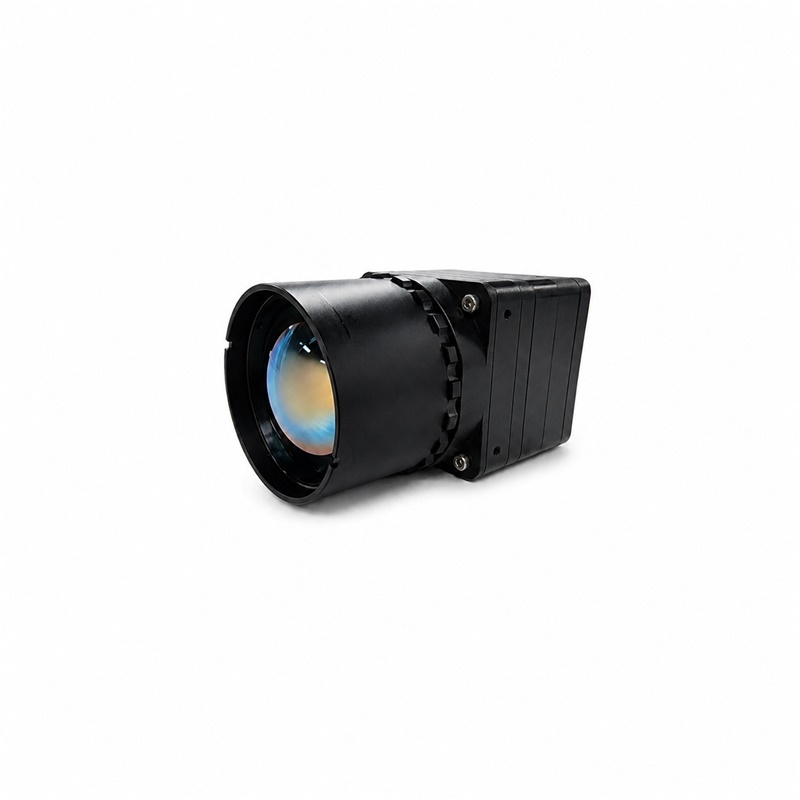
A thermal camera for predictive maintenance is most valuable when heat is a meaningful early indicator of failure.
Thermal modules can help detect abnormal temperature on terminals, breakers, relays, busbars, connectors, and power distribution components. This is one of the strongest applications for fixed infrared camera modules.
Motors and rotating equipment may show abnormal heat due to overload, friction, bearing wear, lubrication issues, or mechanical misalignment. A thermal camera module can be used in fixed monitoring systems or robot inspection platforms.
Battery systems may develop local hot spots, cooling imbalance, or thermal runaway risk. Thermal imaging can support earlier warning and safer monitoring for battery cabinets, energy storage systems, and industrial battery platforms.
MOSFETs, inductors, relays, connectors, DC/DC converters, BMS boards, and industrial electronics may show local heat stress. A USB thermal camera module can support testing, quality control, and inspection fixtures.
A compact infrared camera module can be mounted on an inspection robot to scan motors, cabinets, transformers, battery systems, and production equipment during routine patrols.
Thermal imaging can be added to industrial gateways, AI boxes, monitoring terminals, and predictive maintenance platforms to provide heat-based condition monitoring.
Thermal imaging is not always the right solution. A professional supplier should help the buyer avoid wrong applications, not only sell a module.
A thermal camera module may not be suitable for:
If the target failure does not create a measurable heat pattern, or if the equipment has very low downtime cost, a thermal camera module may not create enough ROI.
Goobuy focuses on compact camera modules and OEM integration support. For thermal imaging projects, the exact module choice depends on the application, host device, interface, and project requirements.
| Item | Status |
| USB thermal camera module | Available depending on selected model and project requirement |
| CVBS thermal camera module | Available depending on selected model and application |
| HDMI / MIPI / SDI / BT.1120 / UART options | Project-dependent and must be confirmed |
| Thermal video output | Available depending on module type |
| Temperature data output | Must be confirmed by module and interface |
| SDK / protocol support | Must be confirmed based on selected module |
| Lens / field of view options | Project-dependent |
| Cable or mechanical adjustment | Project-dependent |
| Housing or enclosure discussion | Project-dependent |
| Fixed monitoring or robot integration support | Project-dependent |
| Full finished handheld thermal camera | Not the main focus |
| Medical diagnostic application | Not recommended |
| Paid NRE customization | Possible when standard modules cannot fully match project requirements |
Goobuy is suitable for OEMs and system integrators who already have a host device, inspection robot, industrial terminal, electrical cabinet monitoring system, battery safety platform, or edge AI device and need a thermal camera module selected around real interface, field of view, mechanical, and deployment requirements.
A successful OEM thermal camera project usually does not start with mass production immediately. It starts with requirement matching, sample evaluation, integration testing, and then customization or pilot production.
| Stage | Buyer Provides | Goobuy Supports | Output |
| Stage 1: Requirement Review | Target equipment, host platform, interface, distance, FOV, temperature data need | Module direction and feasibility discussion | Recommended module path |
| Stage 2: Sample Evaluation | Sample quantity, test environment, software/hardware constraints | Standard module sample or closest available option | Initial test result |
| Stage 3: Integration Check | Host compatibility, video/data capture, mounting space | Interface, lens, cable, and mechanical advice | Integration decision |
| Stage 4: Customization / NRE | Specific changes not covered by standard module | Paid NRE discussion for firmware, cable, mechanical, or interface work | Prototype or customized sample |
| Stage 5: Pilot Batch | Pilot quantity and deployment schedule | Small batch support | Field validation |
| Stage 6: Repeat Supply | Forecast and version control | Stable supply and configuration consistency | OEM production support |
For project-specific requirements, Goobuy can support sample evaluation, interface matching, lens/FOV discussion, cable or mechanical adjustment, and paid NRE development when standard modules cannot fully match the application.
A high-quality thermal camera module inquiry usually includes project background, not only price and MOQ.
Example:
We are developing an industrial predictive maintenance monitoring system for electrical cabinets and motor control panels in the U.S. market. Our current device uses a Linux-based edge gateway and supports USB video input and Ethernet communication.
We want to add a compact thermal camera module to detect abnormal hot spots on breakers, terminals, busbars, and power electronics before failure. The typical working distance is 0.5–1.5 meters, and we need to monitor a cabinet area of approximately 600 × 800 mm.
We are evaluating whether a USB thermal camera module or another interface would be more suitable. We need thermal video for visualization, but temperature data output would be important for alarm thresholds and trend analysis.
Our first target is 3–5 samples for engineering validation, followed by a pilot batch of 50–100 units if the module can be integrated successfully. If the standard module does not fully match our mechanical or interface requirements, we are open to discussing paid NRE customization.
Could you recommend a suitable thermal camera module and advise what additional information is required for evaluation?
This type of inquiry allows Goobuy to evaluate the real application and recommend a more suitable module path.
To help us recommend the right thermal camera module, please send the following project details:
If your project has a clear host platform, application scenario, timeline, and budget, Goobuy can help evaluate a suitable thermal camera module path and discuss sample testing, pilot production, or paid NRE customization.
ROI for thermal camera deployment should be evaluated by comparing avoided downtime, reduced manual inspection labor, lower emergency repair cost, earlier fault detection, safety risk reduction, and added product value against the total cost of hardware, integration, software, testing, installation, and support. For OEMs, ROI should also include whether thermal imaging helps upgrade a normal device into a higher-value predictive maintenance product.
If you already have an industrial monitoring device, edge gateway, robot, inspection terminal, or cabinet monitoring system, a thermal camera module is usually more suitable than a handheld thermal camera. A handheld thermal camera is better for manual inspection routes. A module is better when thermal imaging must be embedded into your own product, software workflow, or customer deployment.
You should define the cabinet area, working distance, and smallest hot spot that must be detected. A wider FOV can cover more of the cabinet, but it reduces the number of pixels on each terminal. A narrower FOV provides more detail on a smaller area. For electrical cabinet monitoring, module selection should be based on actual cabinet size, target terminal size, distance, mounting position, and whether temperature data or alarm thresholds are needed.
If the system only needs human visual observation, thermal video may be enough. If the system needs automatic alarm thresholds, temperature trend analysis, maintenance reports, hot spot comparison, or predictive maintenance software integration, temperature data is usually required. Buyers should confirm whether the selected module supports usable temperature data through the required interface.
The interface should be selected around the existing host platform. USB is suitable for PC, Linux, Android, industrial terminals, and edge AI hosts. CVBS is suitable for DVR or analog video systems. HDMI is useful for direct display. MIPI is suitable for embedded board-level products. SDI or BT.1120 may be used in professional video systems. UART may be required for control or temperature data depending on the module.
Yes. A compact infrared camera module can be integrated into an inspection robot if the module size, weight, interface, power, field of view, mounting method, temperature data output, and host compatibility match the robot platform. Robot developers should provide host platform, inspection distance, target equipment, mounting space, and software requirements before requesting samples.
Predictive maintenance with thermal imaging is most useful for equipment where abnormal heat appears before failure. Typical applications include electrical cabinets, switchgear, motors, bearings, pumps, gearboxes, battery packs, energy storage systems, power electronics, PCB boards, transformers, HVAC systems, production machines, and inspection robots.
Thermal imaging may not be suitable when the target failure does not create a measurable heat pattern, when the equipment has very low downtime cost, when the buyer only needs visible-light video, when the project has no host system or software plan, or when the buyer expects a finished consumer product instead of an OEM module. Thermal imaging is most valuable when heat is an early and measurable indicator of failure.
For battery safety monitoring, you should confirm the battery pack size, working distance, expected hot spot size, required FOV, temperature data need, alarm logic, host platform, operating environment, and installation space. If the system needs thermal trend monitoring or hot spot alarms, temperature data output is more important than thermal video alone.
A USB thermal camera module may work with a Linux-based edge AI gateway if the module output format, driver support, data protocol, frame rate, temperature data requirement, and software capture method are compatible with the host. Buyers should provide the Linux platform, CPU/SoC, USB version, software environment, and whether they need thermal video, temperature data, or both.
A visible-light camera captures appearance, shape, color, and surface detail. A thermal camera module captures infrared radiation and temperature distribution. For predictive maintenance, thermal imaging is useful when failure creates heat before visible damage appears. In many industrial systems, a thermal module can detect overheating earlier than a normal camera.
Thermal imaging usually does not replace all other sensors. It works best as part of a multi-sensor predictive maintenance system. Vibration sensors may detect mechanical imbalance earlier in some rotating equipment, while thermal imaging can detect overheating, friction, electrical resistance, battery hot spots, and power electronics stress. The best solution depends on the failure mode.
Before requesting a sample, please send the target equipment, working distance, target size, FOV requirement, host platform, preferred interface, thermal resolution expectation, temperature data requirement, installation space, operating environment, sample quantity, pilot batch plan, project timeline, and whether customization or paid NRE is acceptable.
For project-specific requirements, Goobuy can discuss customization based on existing module platforms. Possible customization may include interface matching, lens/FOV discussion, cable adjustment, mechanical design, firmware-related support, or other project-dependent changes. If the requirement is outside standard modules, paid NRE may be required.
Goobuy thermal camera modules are best suited for OEMs, system integrators, robot developers, industrial monitoring companies, edge AI device builders, electrical cabinet monitoring system providers, battery safety platform developers, and industrial inspection device manufacturers who already have a host device, real application, timeline, and budget for integration.
This page is not suitable for buyers who only need a finished handheld thermal camera, consumer fever screening device, medical diagnostic product, DIY hobby project, one-time low-budget inspection tool, or visible-light camera. It is designed for industrial predictive maintenance and OEM thermal imaging integration projects.
An OEM should add a thermal camera module when thermal data can help the product detect failures earlier, reduce maintenance risk, improve customer value, support remote monitoring, or create a higher-value industrial solution. Thermal imaging can help transform a normal monitoring product into a predictive maintenance device.
You can start by sending your project background, including the monitored equipment, host platform, interface requirement, working distance, FOV, temperature data need, installation space, sample quantity, pilot batch plan, and customization expectations. Goobuy can then help evaluate whether a USB, CVBS, HDMI, MIPI, SDI, BT.1120, UART, or other thermal camera module path is more suitable for your application.
Follow Me
Address:A615, 6F, Huachuangda Building, No107 Xinghua 1st Road, 43 District, Xinan street, Baoan, shenzhen, China 518101