
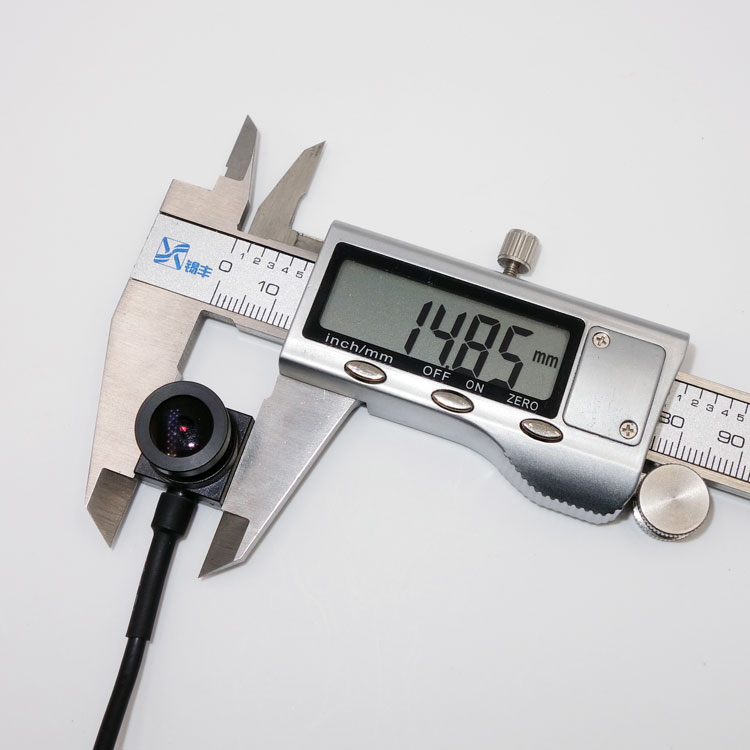
UC-501-2MP is a compact 15×15mm 2MP USB camera module for robotics and embedded vision projects that need a small, UVC-compatible camera head instead of a standard webcam or large industrial camera.
It is best used when the real problem is not only resolution, but physical integration:
| Engineering Need | UC-501-2MP Fit |
|---|---|
| Small camera for robot gripper or end-effector | 15×15mm compact camera head |
| Simple video input for robot host system | USB2.0 UVC output |
| No special camera SDK preferred | Works with standard UVC video workflows |
| Different viewing angles required | M12 lens options from narrow to wide FOV |
| Compact robot or embedded device housing | Small camera module and configurable cable |
| AI / CV processing handled by host | Camera supplies image input; host runs software |
| Waterproof, IP69K or outdoor rugged use required | Not the default version; choose another rugged platform |
| Synchronized multi-camera global shutter system required | Not the first choice; evaluate global shutter platforms |
Many robotics teams do not fail because they cannot find a camera with enough pixels. They fail because the camera is too large, the cable is hard to route, the lens angle is wrong, the driver is complicated, or the camera cannot be placed where the robot actually needs vision.
For robot grippers, wrists, compact service robots, teleoperation rigs and embedded AI boxes, a practical camera module must solve four problems at the same time:
That is why Goobuy UC-501-2MP is positioned as a micro USB camera module for robotics vision integration, not as a generic USB webcam.
Product page: https://www.okgoobuy.com/2mp-mini-usb-camera-UC-501.html
Model keyword: UC-501-2MP
Many robots have limited space around the gripper, wrist, tool head, front panel, docking module or sensor cluster. A normal boxed USB camera may be too large, while a bare board camera may create mounting and protection problems.
UC-501-2MP provides a compact 15×15mm camera format that can be evaluated for:
The value is not simply that the camera is small. The value is that a small camera can be placed closer to the real visual problem.
Robotics teams often prefer a camera that can be opened quickly by a host system. UC-501-2MP supports USB UVC video output, which helps reduce driver and SDK complexity during early validation.
It can be evaluated with host platforms such as:
The customer’s software team can use common video frameworks such as OpenCV, GStreamer, ROS-based workflows or standard UVC capture tools, depending on the host system.
Goobuy supplies the camera module. The customer remains responsible for the robot software, AI model, navigation stack, perception logic and final system validation.
A robot camera may need very different optics depending on where it is installed.
For example:
UC-501-2MP supports interchangeable M12 lens options, allowing the project team to evaluate different focal lengths and fields of view before deciding the final configuration.
Lens selection should be based on:
For robotics, the cable is often as important as the camera itself.
A camera used near a robot joint, gripper, mobile platform or compact housing may require a specific cable length, cable outlet, connector direction or USB interface type.
UC-501-2MP can be evaluated with project-based options such as:
For moving robot joints or vibration-prone areas, the cable route and connector retention should be tested in the real robot, not only on a desktop bench.
Robot grippers often need a camera close to the working point. A camera mounted far away may not clearly see the object, contact area, grip pose or tool-side condition.
UC-501-2MP can be evaluated as a small eye-in-hand camera for:
This does not mean UC-501-2MP is a complete grasping solution. It provides visual input. The customer’s robot software must handle recognition, control and decision logic.
Autonomous mobile robots and AGVs may need additional small cameras for positions where a main camera is too large or unnecessary.
UC-501-2MP can support auxiliary views such as:
For safety-critical navigation or certified obstacle avoidance, customers should use the required safety-rated sensors and system-level validation. UC-501-2MP is better positioned as an auxiliary vision input or project-specific camera module.
Teleoperation systems often require multiple compact camera viewpoints. The camera must be small enough to mount near the operator view, tool view, robot wrist, head-mounted structure or training rig.
UC-501-2MP can be considered for:
In these projects, stability and repeatable image capture are often more important than using the highest possible resolution.
Service robots, delivery robots, hospitality robots and indoor mobile platforms may need compact cameras for near-field viewing and user interaction.
UC-501-2MP may be evaluated for:
The small size makes it easier to integrate into a robot shell without redesigning the whole enclosure.
Inspection robots often have limited space for cameras, lights, cables and protective structures. A large industrial camera may not fit inside a small robot head or tool module.
UC-501-2MP can be used as a visual input for:
If the robot needs waterproof, high-temperature, IP69K, thermal or low-temperature performance, Goobuy may recommend another camera platform instead of the standard UC-501-2MP.
Some OEM devices need a small external or embedded USB camera but do not want to redesign the main host hardware.
UC-501-2MP can be evaluated for:
For these projects, UVC output and small size can shorten sample testing and reduce early integration risk.
Robotics AI projects may require multiple camera viewpoints for collecting training data. The challenge is not only image quality, but consistent deployment across many camera positions.
UC-501-2MP can support multi-view test setups where the customer needs:
For strict frame synchronization, hardware trigger, high-speed capture or global shutter requirements, Goobuy recommends evaluating global shutter camera modules instead.
A normal USB camera may be too bulky for robot wrists, grippers, embedded panels or compact AI devices.
UC-501-2MP solves this with a 15×15mm camera format that can be placed in tight mechanical spaces.
Bare board cameras may be fragile or inconvenient for real equipment. They may need extra mounting, shielding or cable protection.
UC-501-2MP gives engineers a more practical micro camera format for sample testing and device integration.
Some robotics teams do not want a complex camera SDK during early validation.
UC-501-2MP uses a UVC USB approach, making it easier to open the video stream on common host systems.
A gripper view, docking view, wide-angle AMR view and operator-view camera may need different lenses.
UC-501-2MP supports M12 lens selection so customers can test the required field of view before pilot production.
In robots, cable route, cable length, connector retention and vibration can decide whether the camera works in the real product.
Goobuy can discuss cable and connector options based on the customer’s robot structure.
UC-501-2MP is not the first choice if your project requires:
For those projects, Goobuy may recommend rugged USB cameras, IP69K AHD camera kits, thermal modules, STARVIS low-light cameras, global shutter modules or other camera-head platforms.
Before selecting UC-501-2MP for a robotics project, please prepare:
A good RFQ should describe the real robot structure, not only ask for the lowest price.
Goobuy focuses on camera-head selection and project-based configuration for OEMs and system integrators.
For UC-501-2MP robotics projects, Goobuy can help evaluate:
Goobuy does not provide the complete robot system, AI algorithm or navigation stack. The customer provides the host platform, software and final robot validation. This makes UC-501-2MP suitable for engineering teams that already know their robot architecture and need a practical camera module for integration testing.
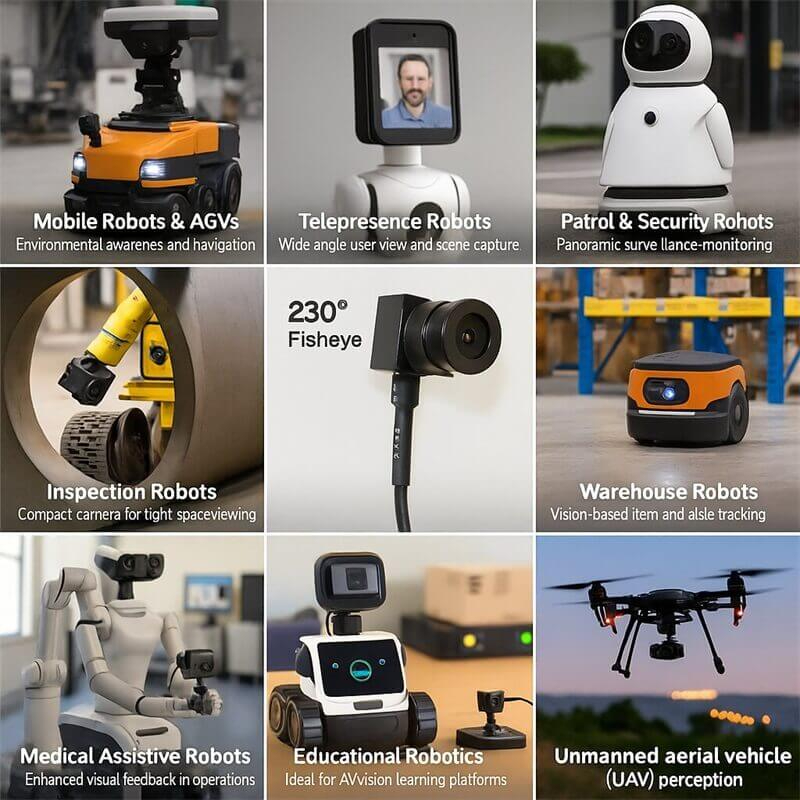
UC-501-2MP is best used as a compact 15×15mm USB camera module for robot grippers, end-effectors, AMR/AGV auxiliary views, service robots, teleoperation rigs, inspection devices and embedded OEM products where standard USB cameras are physically too large.
A normal webcam is usually too large, mechanically inconvenient and difficult to embed into robot structures. UC-501-2MP is designed as a compact camera module with UVC output, M12 lens flexibility and project-based cable options for OEM integration.
Yes, UC-501-2MP is a USB UVC camera module and can be evaluated with common host systems that support UVC camera input. Customers should test the actual resolution, frame rate, exposure, latency and software pipeline on their own host hardware.
Yes, it can be evaluated for robot gripper or end-effector vision when the project needs a small camera near the working point. The final result depends on lens selection, working distance, lighting, mounting angle, cable routing and the customer’s robot software.
UC-501-2MP can be used as an auxiliary vision input for docking, side view, floor marker view, payload view or near-field observation. For certified safety navigation or critical obstacle avoidance, customers should use the required safety-rated sensors and system-level validation.
Yes. UC-501-2MP supports M12 lens options, allowing customers to evaluate different focal lengths, fields of view, distortion levels and working distances. Lens selection should be tested in the real robot or embedded device before pilot production.
UC-501-2MP can be used in software-based multi-camera systems where strict hardware synchronization is not required. If the project requires hardware trigger, global shutter capture, precise frame synchronization or high-speed motion analysis, Goobuy recommends evaluating global shutter camera modules.
Please send your robot type, host system, camera mounting position, available space, target scene, working distance, required field of view, lighting condition, cable length, connector type, sample quantity, pilot plan and any lens, cable or housing customization requirement.
Product page:
https://www.okgoobuy.com/2mp-mini-usb-camera-UC-501.html
Micro & Embedded USB cameras category:
https://www.okgoobuy.com/micro-usb-cam.html
Robotics camera solution guides:
https://www.okgoobuy.com/camera-solutions-for-Robotics.html
Machine vision camera modules:
https://www.okgoobuy.com/Industrial-Camera-Module.html
Follow Me
Address:A615, 6F, Huachuangda Building, No107 Xinghua 1st Road, 43 District, Xinan street, Baoan, shenzhen, China 518101