
ROI for micro thermal camera modules in predictive maintenance should be estimated from real operating data, including asset criticality, downtime cost, failure frequency, inspection labor, module cost, integration cost, and maintenance workflow. Unlike a finished handheld thermal camera, an OEM thermal imaging module is usually integrated into a fixed monitoring device, edge gateway, inspection robot, drone payload, industrial inspection terminal, or customer-developed PdM product.
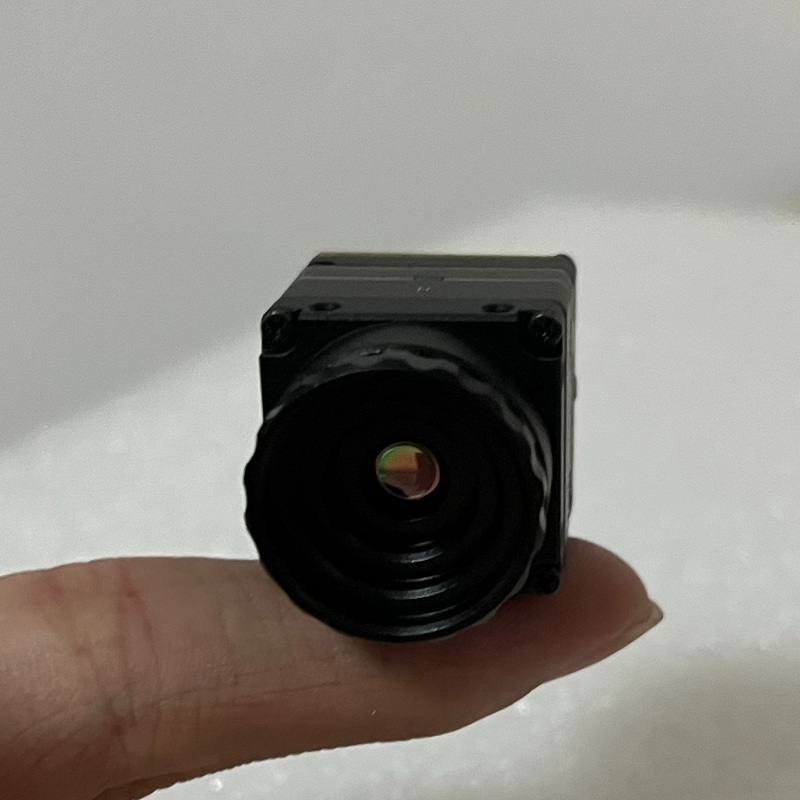
Goobuy provides compact USB, CVBS, and high-resolution thermal camera modules for OEMs and system integrators that need thermal visibility inside their own predictive maintenance systems.
Calculating ROI for Thermal Imaging Cameras in Predictive Maintenance Programs
Introduction
Predictive maintenance ROI should not start with a generic percentage or a guaranteed payback claim. It should start with the customer’s real operating data.
For OEMs and system integrators, the ROI of adding a micro thermal camera module depends on the asset being monitored, the cost of downtime, the frequency of failures, the cost of inspection labor, the integration cost, and whether the customer has a maintenance workflow that can respond to thermal alarms.
A micro thermal camera module is not a complete predictive maintenance platform by itself. It is an imaging component that can be integrated into a fixed monitoring device, edge gateway, inspection robot, drone payload, industrial inspection terminal, or custom PdM system.
Goobuy thermal camera modules are designed for projects where the buyer already has, or plans to build, the host device, enclosure, gateway, software, or final monitoring system and needs a compact thermal imaging core to add thermal visibility.
This guide is written for OEM product managers, industrial monitoring system integrators, predictive maintenance device developers, edge gateway companies, inspection robot teams, drone payload developers, and industrial equipment suppliers who need to evaluate whether adding a micro thermal camera module can improve the value of their own product or monitoring system.
It is not mainly written for maintenance technicians looking for a finished handheld thermal camera, or for companies expecting a camera supplier to provide a complete predictive maintenance software platform.
If you already have a host device, gateway, enclosure, software platform, robot, drone, inspection terminal, or fixed monitoring system, a micro thermal camera module may help you add thermal visibility and build a more valuable predictive maintenance solution.
Thermal imaging can support predictive maintenance, but ROI should not be promised without real operating data.
A thermal camera module does not automatically reduce downtime by a fixed percentage. Its financial value depends on where it is installed, what asset it monitors, how often failures occur, how expensive downtime is, and whether the customer has a maintenance workflow that can act on thermal alerts.
For OEMs and system integrators, ROI is often created in two ways.
First, thermal imaging may help the end user reduce unplanned downtime, avoid emergency repair events, improve inspection coverage, or detect abnormal heat patterns earlier.
Second, thermal imaging may improve the value of the OEM’s final product. A monitoring device, inspection robot, drone payload, edge gateway, or industrial terminal with thermal visibility may become more useful for electrical cabinets, motors, pumps, HVAC equipment, process equipment, and remote assets.
This is why Goobuy recommends project-based ROI evaluation instead of fixed public payback claims.
Predictive maintenance projects are often approved only when the buyer can explain the economic value clearly. For a thermal camera module project, ROI may come from several areas:
However, these benefits are not automatic. The real ROI depends on the customer’s asset criticality, failure history, monitoring method, software workflow, alarm response process, and total integration cost.
A micro thermal camera module should therefore be evaluated as one part of a complete system, not as a standalone financial guarantee.
Before estimating ROI, buyers should confirm the real project conditions.
Key inputs include:
Without these inputs, ROI cannot be calculated responsibly. At most, the supplier can help build a cost and selection framework.
Key Factors Influencing ROI
The financial impact of thermal imaging cameras hinges on several factors:
A 2025 IndustryWeek study found that predictive maintenance with thermal imaging can reduce downtime by 30-50% and maintenance costs by 20-40%, directly impacting profitability.
How to Estimate ROI for a Thermal Camera Module Project
ROI estimation should start from the customer’s real maintenance cost, not from generic industry percentages. A micro thermal camera module is only one part of a complete predictive maintenance system, so the calculation should include both hardware and integration cost.
A practical ROI model can include the following:
Annual Avoided Downtime Cost = Downtime hours potentially reduced × downtime cost per hour
This value depends on whether the monitored asset is truly critical and whether thermal monitoring can help the maintenance team respond before a shutdown occurs.
Annual Avoided Repair Cost = Number of preventable failures × average repair cost per failure
This should only include failures where abnormal heat is a realistic warning sign.
Annual Inspection Labor Savings = Manual inspection hours reduced × labor cost per hour
This applies when fixed monitoring, robotic inspection, drone inspection, or automated data capture reduces manual inspection effort.
Annual Risk Reduction Value = Estimated value of avoiding safety incidents, product loss, emergency service, or secondary damage
This part should be estimated carefully and should not be exaggerated without internal data.
Total Project Cost = Thermal modules + host device + enclosure + cable + mounting + software integration + gateway + installation + testing
For OEM projects, the cost may also include mechanical design, firmware work, SDK integration, software development, certification, and sample validation.
Estimated ROI = (Annual benefit − total project cost) ÷ total project cost
Estimated Payback Period = Total project cost ÷ annual benefit
The calculation should be treated as an internal estimation model, not a guaranteed financial result.
Calculating ROI: A Step-by-Step Approach
To quantify the value of our thermal imaging camera for predictive maintenance, follow this approach:
The following example is only a calculation framework. It should not be treated as a guaranteed result.
A system integrator plans to add thermal monitoring to a fixed electrical cabinet monitoring device. The customer wants to monitor 20 critical cabinets in a facility where overheating electrical components have caused several unplanned service events in the past.
The project cost may include:
The potential benefit may include:
If the customer can reduce even a small number of high-cost emergency events, the thermal monitoring function may justify the integration cost.
If the monitored assets are not critical, failure frequency is low, the thermal camera is not installed in the right position, or no one responds to alarms, ROI may be weak.
This is why Goobuy recommends project-based ROI evaluation instead of using fixed public payback claims.
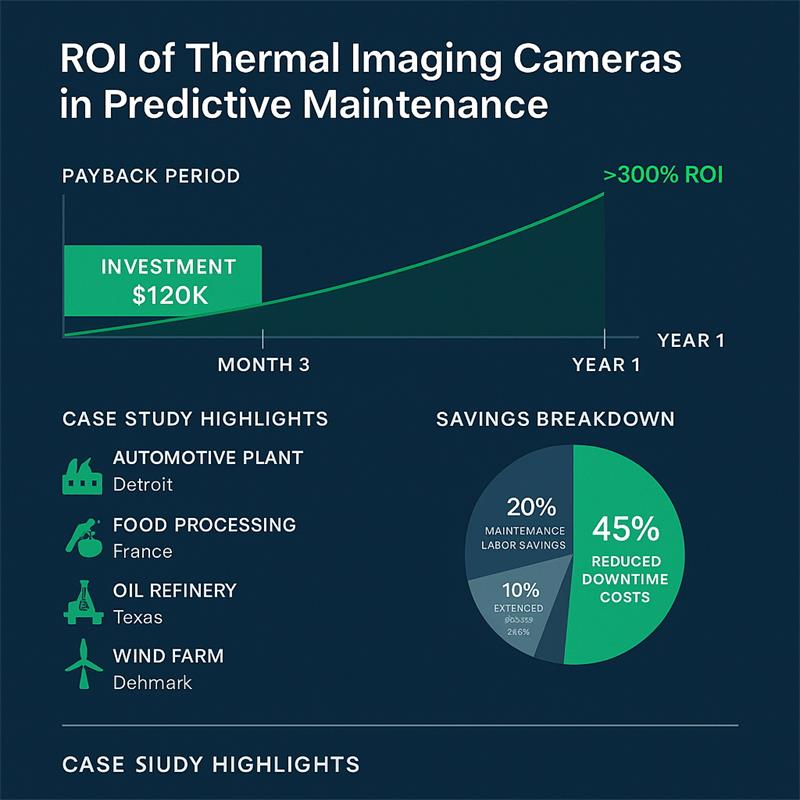
Case Studies: Real-World ROI in Action
Thermal monitoring does not create the same ROI in every application. ROI is usually stronger when the monitored asset is critical, downtime is expensive, failure risk is real, thermal symptoms are meaningful, and the customer can respond quickly to alarms.
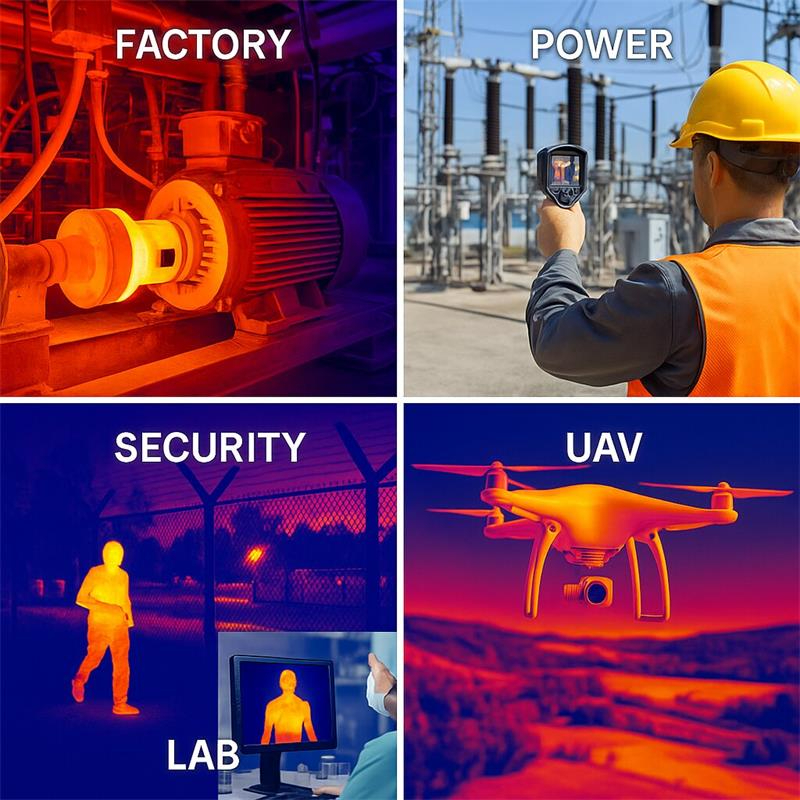
The following application types are more suitable for ROI evaluation.
Electrical cabinets, switchgear, breakers, busbars, transformers, and power distribution equipment are common targets for thermal predictive maintenance.
Thermal monitoring may support ROI when abnormal heating can indicate loose connections, overload, unbalanced loads, aging components, contact resistance, or other electrical risks.
For OEMs and system integrators, a micro thermal camera module can be integrated into cabinet monitoring devices, fixed inspection systems, edge gateways, or electrical safety monitoring products.
Motors, bearings, pumps, fans, belts, shafts, and rotating equipment may show abnormal heating when friction, overload, lubrication problems, blockage, or mechanical stress increases.
Thermal imaging should not replace vibration analysis, current monitoring, or other condition-monitoring methods. It is more valuable as a complementary monitoring layer.
HVAC systems, compressors, chillers, fans, refrigeration equipment, and facility mechanical systems can be good ROI candidates when failures cause production interruption, comfort problems, food storage risk, equipment damage, or data-center cooling risk.
A thermal camera module can be integrated into a facility monitoring device, inspection terminal, edge gateway, or fixed monitoring box to provide repeatable thermal visibility.
Thermal monitoring may support ROI when production quality or process stability depends on heating, cooling, sealing, drying, curing, packaging, molding, or temperature consistency.
In these systems, the thermal camera module provides image or temperature data. The customer’s host device, controller, or software determines whether the process is normal or abnormal.
For robotics, drone, and edge gateway companies, ROI may come from product differentiation as much as from maintenance savings.
Adding a thermal camera module can help the final system inspect electrical equipment, rooftops, solar assets, industrial facilities, HVAC units, motors, pumps, tanks, pipelines, and remote equipment.
This is often a better fit for Goobuy than selling a finished handheld thermal camera.
ROI Comparison Table
|
Case Study |
Annual Savings |
Investment |
ROI |
Payback Period |
|
Ohio Manufacturing |
$255,000 |
$15,000 |
1600% |
1 month |
|
UK Oil Refinery |
$720,000 |
$12,000 |
5900% |
3 weeks |
|
Germany Wind Farm |
$380,000 |
$20,000 |
1800% |
2 months |
|
Netherlands Dairy |
$225,000 |
$13,000 |
1630% |
1.5 months |
Why Goobuy Micro Thermal Modules Fit OEM ROI Projects
Goobuy thermal camera modules are designed for OEMs and system integrators who need thermal imaging hardware inside their own devices or monitoring systems.
Key advantages include:
Goobuy does not position the thermal module as a complete predictive maintenance platform. The customer’s host system, gateway, software, alarm logic, and maintenance workflow determine how thermal data is processed and how ROI is realized.
The cost of a thermal camera module project should not be estimated only from a public unit price. The final cost may depend on:
For this reason, Goobuy recommends project-based quotation instead of using a fixed public module price for ROI calculation.
Conclusion & Call to Action
If you are building a predictive maintenance device, fixed monitoring system, inspection robot, drone payload, edge gateway, or industrial inspection terminal, Goobuy can help evaluate the thermal camera module options for your project.
To support a realistic ROI discussion, please send:
Goobuy can help you choose a suitable thermal camera module, but the final ROI should be calculated using your real operating data and maintenance workflow.
No. A thermal camera module cannot guarantee ROI by itself. ROI depends on asset criticality, downtime cost, failure frequency, integration cost, alarm response workflow, and whether abnormal heat is a meaningful failure indicator for the monitored equipment.
Useful ROI inputs include target equipment type, number of monitoring points, failure history, downtime cost, repair cost, inspection labor cost, monitoring method, required resolution, monitoring distance, host platform, integration cost, and expected batch quantity.
A micro thermal module may be more suitable for OEM integration, but the full project cost also includes host device, enclosure, cable, mounting, software, gateway, installation, and testing. It should not be compared only by module price.
ROI is more likely to be stronger when the monitored assets are critical, downtime is expensive, failure risk is real, manual inspection is difficult, and the customer has a workflow to respond to thermal alerts.
ROI may be weak when the equipment is not critical, failure frequency is low, thermal symptoms are unclear, the system is only a small trial, or the customer has no host device, software platform, alarm logic, or maintenance response process.
In most projects, the thermal module does not connect directly to PLC or SCADA by itself. It usually needs an embedded host, edge gateway, image-processing board, DVR, or controller to process the thermal data and convert it into a signal or protocol the customer’s system can use.
No. Thermal imaging should not be treated as a replacement for vibration analysis, current monitoring, acoustic monitoring, pressure monitoring, or other condition-monitoring methods. It is most useful as a complementary layer when abnormal heat is an important warning sign.
The best ROI does not always come from the highest resolution. The right resolution depends on target size, monitoring distance, field of view, defect size, temperature range, host processing capability, integration cost, and budget.
Goobuy can help evaluate module selection, hardware cost factors, integration feasibility, and technical fit. The final ROI should be calculated by the customer or system integrator using real operating data, downtime cost, repair cost, inspection cost, and maintenance workflow.
Please send the target equipment, number of monitoring points, monitoring distance, required field of view, temperature range, resolution preference, output interface, host platform, mechanical space, enclosure requirement, sample quantity, batch quantity, and whether you need live video, thermal data, SDK, or alarm output.
A micro thermal camera module is not a complete predictive maintenance system by itself. Its ROI depends on how it is integrated into the customer’s device, monitoring position, software logic, alarm workflow, and maintenance process.
For OEMs and system integrators, the key question is not:
“How much ROI can a thermal camera guarantee?”
The better question is:
“Can thermal imaging improve our product, reduce inspection effort, monitor critical assets, or help customers respond earlier to abnormal heat patterns?”
That is where Goobuy’s compact thermal camera modules can support predictive maintenance devices, fixed monitoring systems, inspection robots, drone payloads, edge gateways, and industrial inspection terminals.
Follow Me
Address:A615, 6F, Huachuangda Building, No107 Xinghua 1st Road, 43 District, Xinan street, Baoan, shenzhen, China 518101