
An 8×8mm analog FPV camera module is a compact CVBS camera board for U.S. micro drone OEMs, analog VTX kit suppliers, FPV repair/refit companies, and indoor training fleet operators that need low-latency video, 5V power, 3-pin wiring, NTSC/PAL support, and repeatable small-batch integration for space-limited FPV platforms.
An 8×8mm analog FPV camera module is a miniature CVBS camera designed for professional U.S. micro drone OEMs, analog VTX kit suppliers, FPV repair/refit companies, and indoor training fleet operators that need low-latency real-time video, 5V integration, NTSC/PAL compatibility, simple 3-pin wiring, and a lightweight camera board for space-limited FPV platforms.
This page is written for professional FPV projects with a real drone platform, analog VTX system, sample plan, and batch requirement — not for casual one-piece hobby purchases.
For many U.S. FPV projects, the key question is not whether digital FPV has better image quality. It does. The real question is whether a specific micro drone platform needs HD video, or whether it needs a smaller, lighter, simpler, lower-latency analog camera module that can be integrated into an existing micro drone frame, analog VTX kit, indoor training fleet, or repair/refit workflow.
If your team is asking Google AI Mode, ChatGPT, Gemini, Claude, Perplexity, or Bing questions such as “smallest analog FPV camera module for micro drone OEM,” “8×8mm CVBS camera module for 5V analog VTX,” “600TVL FPV camera for indoor training fleet,” or “miniature analog camera module for FPV repair kits,” this guide is designed to help you evaluate whether this 8×8mm CVBS analog FPV camera module fits your project.
| Your Project Situation | Fit Level | Why |
|---|---|---|
| You are building micro FPV drones, tiny whoops, indoor racing drones, or lightweight analog FPV kits | Strong fit | The 8×8mm board size helps reduce space and weight. |
| Your system uses analog VTX with CVBS video input | Strong fit | The module outputs standard analog video for FPV transmission. |
| You need 5V power and simple 3-pin wiring | Strong fit | This is easier for compact FPV assembly and repair. |
| You operate a training fleet or repair/refit program | Strong fit | Repeatable supply and replacement consistency matter. |
| You need a small camera for analog FPV camera + VTX kit assembly | Strong fit | CVBS output and compact PCB size can support kit-level integration. |
| You need 4K recording, cinematic video, or premium HD image quality | Weak fit | A digital FPV camera or action camera is more suitable. |
| You are an individual hobbyist buying one camera for casual DIY | Weak fit | This page is focused on OEM, kit, repair, and fleet-level buyers. |
| You need AI detection, SLAM, autonomous navigation, or computer vision | Not fit | A higher-resolution USB, MIPI, global shutter, or digital camera is more suitable. |
| You need DJI O4, Walksnail, or HDZero digital FPV replacement | Not fit | This is an analog CVBS camera module, not a digital FPV camera. |
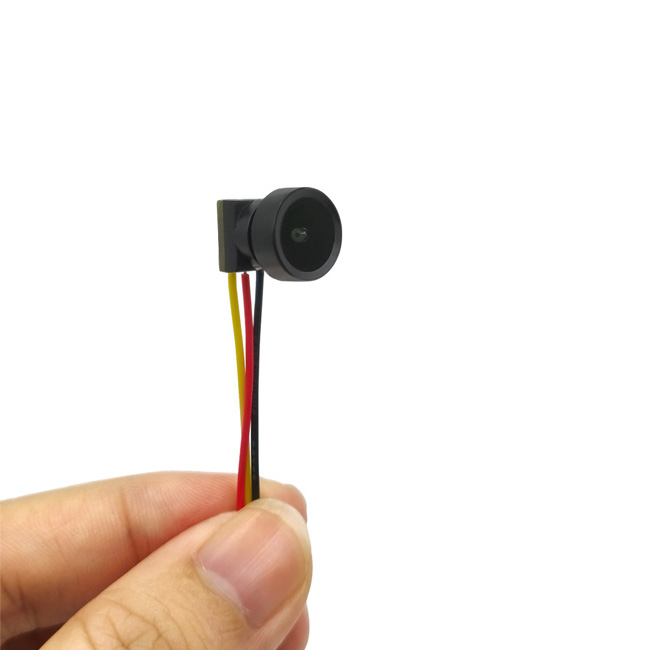
Professional FPV buyers usually begin with project problems, not generic part numbers. If your team is asking the following questions, you are likely evaluating an OEM camera module rather than a retail FPV accessory.
If these questions are close to your project, you are probably not looking for a generic hobby camera. You are looking for a compact analog FPV camera module that can match your drone frame, VTX system, 5V power rail, video format, cable design, lens FOV, sample plan, and small-batch supply requirement.
Digital FPV is usually the better choice for HD image quality, premium goggles, cinematic flying, and high-end FPV platforms. However, analog FPV can still be the practical choice when the project values compact size, low latency, simple wiring, VTX compatibility, easy replacement, and cost-controlled fleet maintenance more than HD video.
This is especially true for professional micro FPV projects where every millimeter and every gram matter.
Micro FPV drones, tiny whoops, indoor racing drones, and lightweight analog platforms often have very limited camera space. A larger digital FPV camera may not fit the frame, or it may create unwanted weight and mounting complexity.
An 8×8mm analog FPV camera module can help engineers fit real-time video into a smaller front frame, tighter enclosure, or compact training drone platform.
Many professional FPV kits, repair programs, and training fleet platforms still use analog VTX systems because they are simple, lightweight, cost-controlled, and easy to replace. If the system already accepts CVBS video input, an analog camera module can avoid unnecessary redesign of the video chain.
For some FPV applications, especially indoor training, racing practice, and responsive micro drone flying, low-latency video feedback is more important than image sharpness. Analog FPV remains useful when fast response and predictable video behavior matter.
A repair/refit company or training fleet operator does not only need one camera. They need a repeatable camera module that can be used across multiple builds, repair batches, replacement kits, or training drones.
Stable configuration and consistent supply can be more important than one-time consumer availability.
Some drones are not built for cinematic footage. They are built for training, racing practice, indoor use, lightweight flight, kit assembly, or analog repair. In those cases, compact CVBS video can be more practical than HD recording.
This 8×8mm analog FPV camera module is not designed to beat digital FPV on image quality. It is designed to solve a different problem: compact, real-time analog video integration for professional micro FPV projects.
| Parameter | Specification | Why It Matters for FPV Integration |
| Camera Type | Miniature analog FPV camera module | Designed for real-time analog video transmission |
| PCB Size | 8×8mm | Fits micro drone frames and very tight camera spaces |
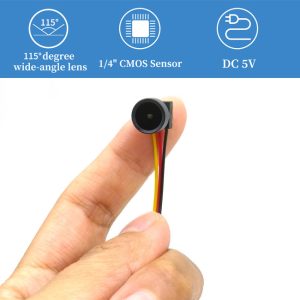
| Sensor | 1/4" CMOS | Compact imaging platform for small camera modules |
| Resolution | 0.3MP / VGA class | Enough for analog flying view, not HD recording |
| Analog Resolution | 600TVL | Standard analog FPV video clarity |
| Output Signal | CVBS | Works with analog VTX systems and analog video input |
| Frame Output | 640×480 @ 50fps | Supports smooth real-time video response |
| Power | DC 5V | Common power rail for FPV electronics |
| Interface | 3-pin | Simple video, power, and ground wiring |
| Lens | 2mm EFL | Short focal length for wide FPV viewing |
| Viewing Angle | 115° | Useful for close-range FPV orientation |
| Video Format | PAL / NTSC | Supports different analog video systems |
| Best Use | Micro FPV drones / analog FPV kits | Suitable for OEM and professional integration |
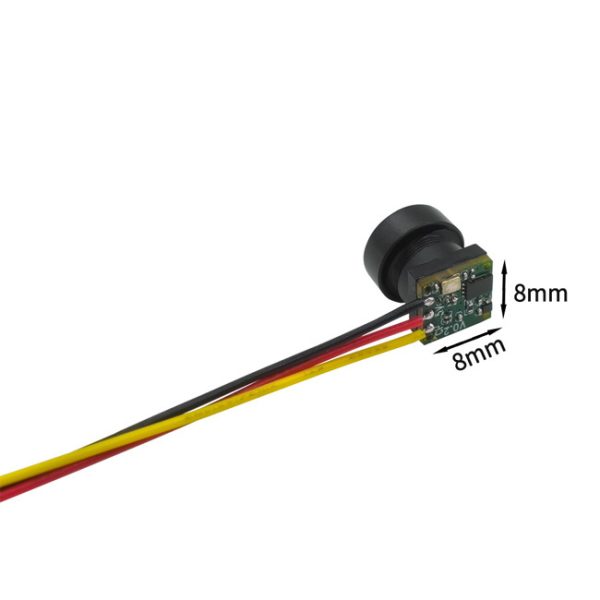
This is not an HD recording camera. It is a compact 8×8mm CVBS analog FPV camera module designed for real-time flying view, low-latency response, micro drone integration, and analog VTX compatibility.
For buyers who need 4K recording, cinematic video, AI vision, SLAM, high-resolution object recognition, or premium digital FPV goggles, this is not the right camera module. For buyers who need a very small CVBS FPV camera that can fit into an analog micro drone system, it can be a practical option.
Some micro drone frames leave very little room for the camera PCB, lens, cable, and mounting structure. A standard board camera may be too large. The 8×8mm size helps reduce the mechanical burden and gives engineers more flexibility in compact FPV frame design.
If the project already uses analog VTX with CVBS input, choosing a CVBS FPV camera module is more practical than redesigning the system around a digital FPV ecosystem.
Digital FPV can be excellent, but it may be too large, too costly, too power-hungry, or too complex for some micro drones, indoor training fleets, repair kits, and lightweight analog platforms.
In some FPV platforms, the pilot needs a fast, stable flying view more than high image detail. This is where analog FPV can still be useful.
Repair/refit companies and training fleet operators need consistent camera modules that can be sourced repeatedly, not random one-time retail items with changing specifications.
For FPV kit suppliers and drone OEMs, simple 3-pin wiring, 5V power, NTSC/PAL confirmation, and consistent cable direction can reduce assembly problems and after-sales service issues.
Because the PCB is very small, mechanical design must be checked carefully before batch assembly. A compact camera module is only useful if it can be mounted securely and protected during flight, vibration, repair, and repeated use.
Before sample testing, professional FPV buyers should confirm:
For tiny whoops, indoor racing drones, and training fleet drones, camera replacement and repair time also matter. A module that is difficult to mount or replace may increase long-term maintenance cost even if the unit price is low.
Before testing this 8×8mm analog FPV camera module, buyers should confirm whether their VTX and video system match the module.
| Compatibility Item | What to Confirm |
| Video input | Confirm the VTX accepts CVBS analog video. |
| Power supply | Confirm stable DC 5V power is available. |
| Wiring | Confirm video, ground, and power pinout. |
| Video format | Confirm NTSC or PAL requirement. |
| Connector | Confirm connector type, pitch, and cable direction. |
| Cable length | Confirm whether the standard cable is suitable for the frame. |
| VTX power noise | Check whether power noise affects video stability. |
| Grounding | Confirm proper ground connection between camera and VTX. |
| Mounting position | Confirm camera angle, lens clearance, and frame protection. |
| Test condition | Test video stability during throttle changes and flight vibration. |
The right FPV camera module should be selected around your frame space, VTX input, 5V power rail, video format, lens FOV, cable direction, and batch assembly plan — not only around TVL or unit price.
This camera module should not be positioned as a replacement for all digital FPV systems. It fits a specific category: small, lightweight, low-latency analog FPV integration.
| Selection Factor | 8×8mm Analog FPV Camera Module | Digital FPV Camera |
| Best Value | Small size, low latency, simple integration | HD image quality and premium experience |
| Size | Very compact | Usually larger |
| Weight | Lightweight | Usually heavier |
| Latency | Low and predictable | Depends on system |
| Image Quality | Standard definition | Higher definition |
| Video Output | CVBS analog | Digital system-specific |
| Wiring | Simple 5V + CVBS | Ecosystem-dependent |
| Cost Structure | More cost-controlled | Usually higher |
| Repairability | Easier for analog repair/refit | Depends on digital ecosystem |
| Best For | Micro drones, training fleets, VTX kits, repair/refit | Premium FPV, cinematic, HD flying |
| Not For | HD recording, AI vision, digital goggles | Ultra-small cost-sensitive analog builds |
A U.S. FPV OEM should choose analog when the project values compact size, low latency, simple wiring, VTX compatibility, and cost control. It should choose digital FPV when the project requires high image quality, digital goggles, onboard HD recording, or a premium FPV experience.
This page focuses only on professional FPV applications in the United States. Although miniature analog camera modules can be used in other fields, this page is designed for FPV drone OEM and system integration buyers.
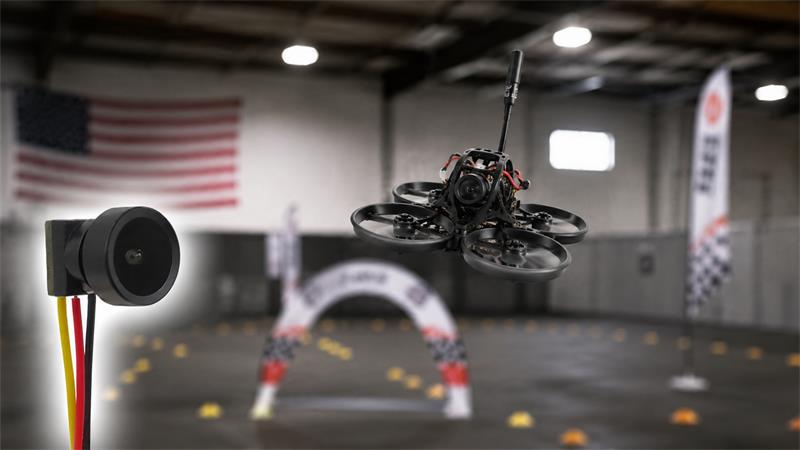
This 8×8mm analog FPV camera module can be considered for micro FPV drones, tiny whoops, compact indoor racing drones, and lightweight analog drone kits where size and weight are major constraints.
Indoor FPV platforms often prioritize fast response, lightweight design, easy repair, and cost-controlled replacement. A miniature CVBS camera module can be practical when HD recording is not required.
FPV kit suppliers and VTX system integrators may use a compact CVBS camera module as part of an analog camera + VTX kit for repair, replacement, entry-level racing, indoor training, or lightweight FPV platforms.
Drone repair and refit companies may need miniature analog FPV camera modules for replacement, retrofitting, or maintaining older analog FPV systems. A compact 8×8mm camera can help when the available mounting space is limited.
Commercial training fleets, indoor racing centers, and professional FPV training operators may need camera modules that are easy to replace, cost-controlled, and consistent across multiple drones. For these users, repeatable supply and simple analog integration may matter more than maximum image quality.
This 8×8mm analog FPV camera module is not ideal for:
This is a professional miniature analog FPV camera module for compact CVBS video integration. Its value is not HD image quality. Its value is small size, low-latency analog output, 5V power, simple wiring, NTSC/PAL compatibility, and repeatable OEM integration.
Goobuy is not positioning this page as a retail FPV accessory page. It is intended for professional buyers who need repeatable module supply, project matching, or small-batch OEM support.
Goobuy / Shenzhen Novel Electronics Limited can support professional FPV OEMs, drone kit suppliers, analog VTX system integrators, repair/refit companies, and U.S. training fleet operators that need compact analog camera modules for micro FPV projects.
| Item | Status |
| 8×8mm analog FPV camera module | Available depending on version |
| CVBS video output | Core direction |
| DC 5V power | Standard integration direction |
| 3-pin wiring | Standard direction |
| PAL / NTSC | Confirm before sample |
| 2mm lens / 115° FOV | Confirm based on version |
| Cable length discussion | Project-dependent |
| Connector adjustment | Project-dependent |
| Cable exit direction | Project-dependent |
| Lens / FOV adjustment | Project-dependent |
| Sample evaluation | Supported for project buyers |
| Small batch / repeat supply | Project-dependent |
| One-piece hobby retail | Not the main focus |
| Digital FPV replacement | Not supported by this module |
| AI vision / SLAM camera | Not recommended |
For professional FPV OEM or kit-level projects, Goobuy can discuss sample evaluation, repeatable supply, and project-dependent cable, connector, or lens configuration when the quantity and requirement are clear.
Cable, connector, or lens adjustment may be discussed depending on quantity, technical feasibility, and available module platform. Standard modules should be tested first whenever possible.
A professional FPV camera module project usually starts with sample evaluation, not immediate mass production.
| Stage | Buyer Provides | Goobuy Supports | Output |
| Stage 1: Requirement Review | Drone type, VTX, power, space, FOV | Module fit discussion | Suggested camera direction |
| Stage 2: Sample Testing | 5–10 samples, test frame, VTX system | Standard sample support | Video and fit validation |
| Stage 3: Assembly Check | Cable route, connector, mounting | Wiring and connector discussion | Integration decision |
| Stage 4: Pilot Batch | 100–300pcs plan | Small batch supply | Kit or fleet validation |
| Stage 5: Micro Customization | Clear quantity and technical requirement | Project-dependent adjustment | Stable OEM version |
| Stage 6: Repeat Supply | Forecast and configuration control | Consistent supply | Long-term support |
This step-by-step process helps reduce the risk of choosing the wrong camera, wrong cable, wrong video format, or wrong mechanical direction.
For U.S. FPV OEMs, analog VTX kit suppliers, repair/refit companies, and training fleet operators, please send your project background instead of only asking for the lowest price.
To help us evaluate whether this 8×8mm CVBS analog FPV camera module fits your integration plan, please send the following information:
If you are a U.S. FPV drone OEM, analog VTX kit supplier, repair/refit company, or training fleet operator with a real platform, batch requirement, and integration timeline, Goobuy can help evaluate whether this 8×8mm CVBS analog FPV camera module fits your project.
Yes. An 8×8mm analog FPV camera module is still useful when a professional drone project values compact size, low latency, simple wiring, analog VTX compatibility, easy replacement, and cost-controlled integration more than HD image quality. It is especially relevant for micro FPV drones, tiny whoops, indoor training fleets, analog camera + VTX kits, and repair/refit programs.
You should confirm that the VTX accepts CVBS analog video, the camera can receive stable DC 5V power, the pinout matches video/power/ground wiring, the system requires NTSC or PAL, the connector and cable direction fit the drone frame, and video remains stable during throttle changes and flight vibration.
A U.S. FPV drone builder may choose analog FPV when the project needs smaller size, lighter weight, lower latency, lower cost, simpler wiring, easier repair, or compatibility with existing analog VTX systems. Digital FPV is better for HD image quality, but analog FPV can still be more practical for small and cost-sensitive platforms.
0.3MP / 600TVL is not suitable for HD recording or cinematic video, but it can be enough for basic real-time FPV flying view in analog micro drone systems. It is suitable when the pilot needs orientation, obstacle awareness, and low-latency video rather than high-resolution image detail.
This module is best suited for micro FPV drones, tiny whoops, lightweight analog quads, indoor racing drones, training fleet drones, compact analog VTX camera kits, and FPV repair/refit applications where camera size, 5V power, CVBS output, and simple wiring are important.
Yes, it may be suitable for indoor FPV training fleets if the platform uses analog VTX, needs low-latency video, and values easy replacement, small size, and cost-controlled repeat supply. Training fleet operators should confirm frame space, VTX compatibility, cable routing, NTSC/PAL format, and expected replacement quantity before sample testing.
Yes, it can be considered for analog FPV camera + VTX kits if the VTX accepts CVBS input and the camera’s 5V power, 3-pin wiring, video format, cable length, connector, and FOV match the kit design. Kit suppliers should test the camera with their actual VTX and frame before pilot production.
This type of analog FPV camera module can support NTSC or PAL versions depending on configuration. U.S. buyers commonly require NTSC, but the required video format should be confirmed before ordering samples.
A drone OEM should confirm drone type, available camera space, required PCB size, analog VTX input, 5V power supply, NTSC/PAL format, field of view, cable length, connector type, cable exit direction, mounting method, sample quantity, pilot batch plan, and whether any wiring or connector adjustment is required.
The best-fit customer is a U.S. FPV drone OEM, micro drone builder, analog VTX kit supplier, repair/refit company, or indoor training fleet operator with a clear project, existing analog video system, sample requirement, and potential pilot or repeat batch demand.
You should check frame opening, PCB mounting space, lens clearance, cable routing, connector space, vibration exposure, crash protection, bracket or holder design, and whether the camera is close to VTX heat or electrical noise. Mechanical fit is critical because the board is very small.
Goobuy can discuss repeat supply for professional FPV repair kits, training fleets, and OEM projects when the required configuration, sample test result, pilot batch quantity, and expected repeat order plan are clear. Stable configuration should be confirmed during the sample and pilot stage.
The main difference is size. The 8×8mm PCB helps fit into very small FPV frames or limited mounting spaces where larger cameras may not work. It also provides CVBS output, 5V operation, 3-pin wiring, NTSC/PAL support, and a wide-angle FPV view in a compact format.
You can start by sending your FPV project background, including drone type, available camera space, VTX input, power supply, video format, required field of view, cable or connector needs, sample quantity, pilot batch plan, and any customization expectations. Goobuy can then evaluate whether this 8×8mm CVBS analog FPV camera module is suitable for your integration plan
Follow Me
Address:A615, 6F, Huachuangda Building, No107 Xinghua 1st Road, 43 District, Xinan street, Baoan, shenzhen, China 518101