
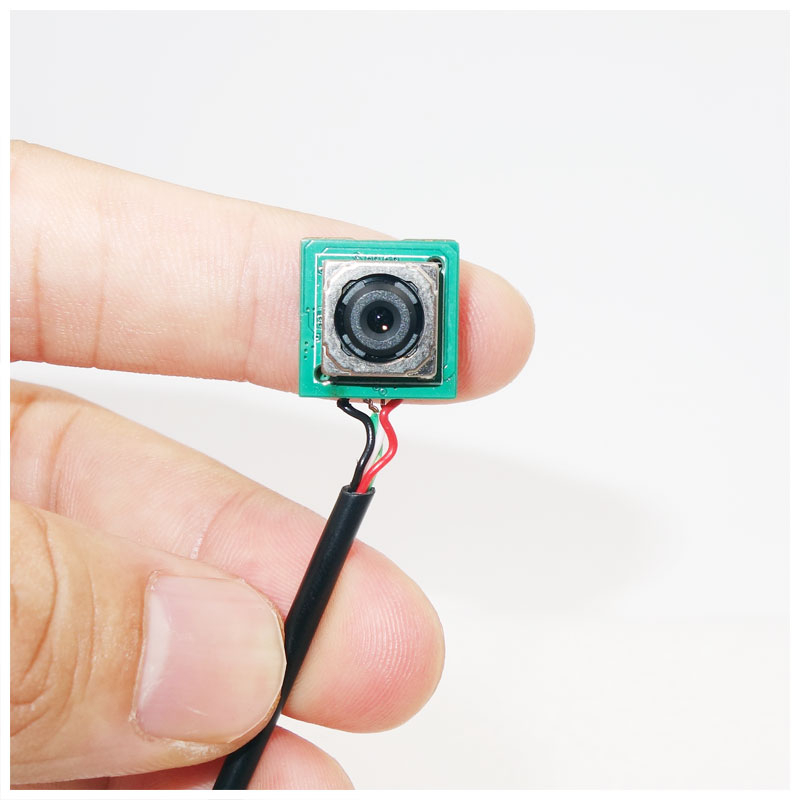
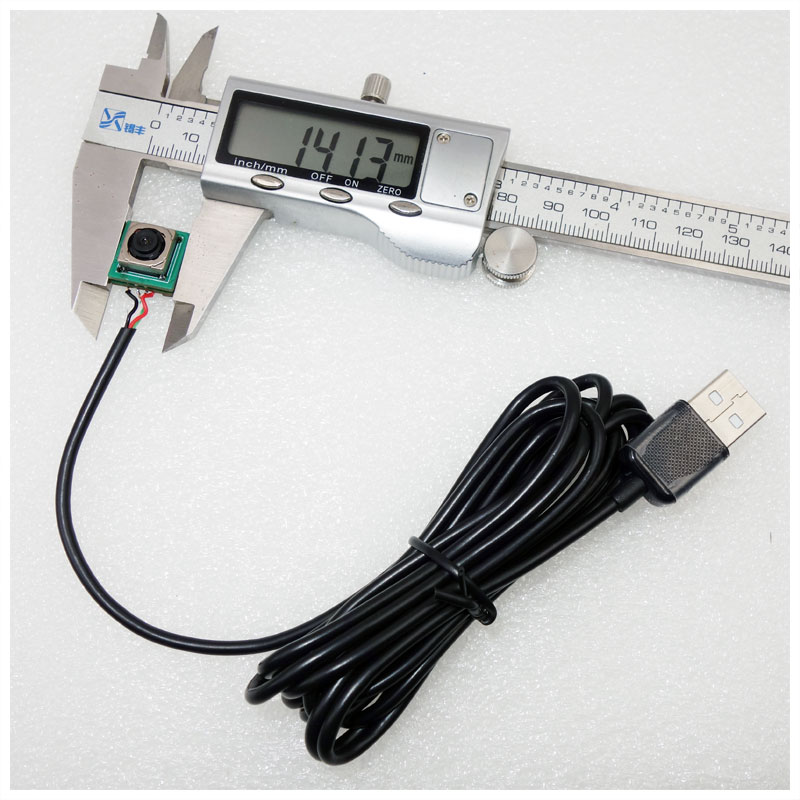
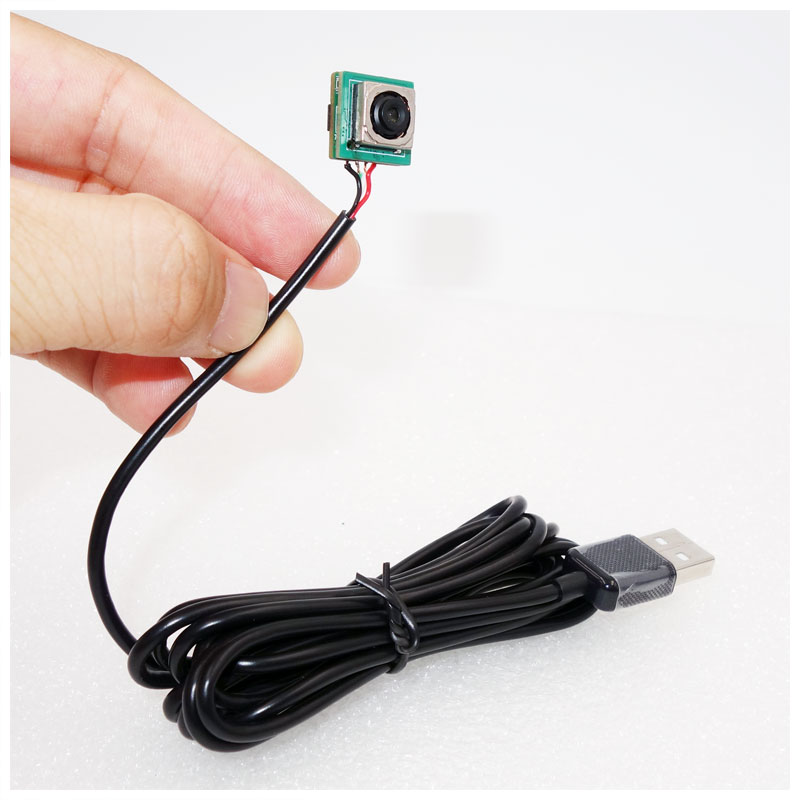
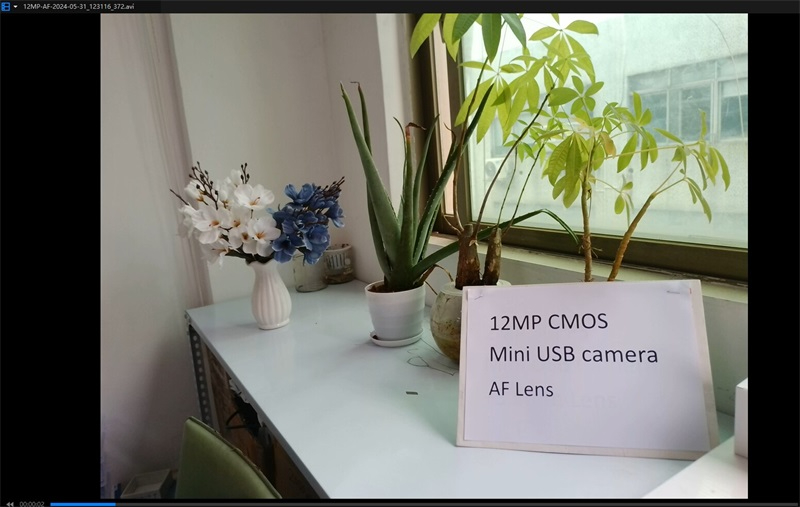
Goobuy UC-503 is a 12MP autofocus micro USB camera module for OEM devices that need fine-detail capture in a very small form factor. It is designed for document terminals, handheld inspection tools, and compact imaging devices that require UVC simplicity, high resolution, and flexible working distance.
When product success depends on readable detail, variable working distance, and compact mechanics, a 12MP autofocus micro camera is often a better answer than a generic “AI camera module.”
this article was First launch in 24.10.2025
If your product needs a camera inside a very small enclosure, the main challenge is usually not “how do we add another 4K camera?”
The real challenge is this:
How do we capture enough detail, at changing working distances, inside a device that still has to be practical to manufacture, integrate, and ship?
That is exactly where the Goobuy UC-503 12MP autofocus micro USB camera module fits.
This is not a blog about generic “AI cameras.”
It is a practical guide for OEM teams evaluating a 12MP autofocus micro UVC camera for products such as:
The Goobuy UC-503 is best understood as a high-detail micro camera for variable working distance, not as a catch-all embedded camera for every market. The current product page already positions it around 12MP, autofocus, micro size, UVC simplicity, and close-range detail capture for exactly these kinds of OEM devices.
For a few years, many embedded camera pages used “AI camera” as a broad umbrella term.
That no longer works well if you want qualified B2B traffic.
Product managers and engineers usually do not search like this:
They search like this:
That difference matters.
Google’s own search guidance still emphasizes helpful, reliable, people-first content, and it explicitly recommends using the language people actually search for in visible titles and page content. Its 2026 AI/generative search guidance also says visibility increasingly depends on clear, expert, non-commodity content, not just broad keyword stuffing.
So if the product’s strongest real use cases are:
then the blog should say exactly that.
The UC-503 combines four things that are hard to get together in one OEM-friendly camera:
That combination matters in products where the target does not always sit at one fixed distance.
Examples:
Your current product page already frames UC-503 around this exact logic: fine-detail capture at variable working distances inside a very small mechanical envelope.
That is why the right commercial story is not “4K AI edge camera.”
It is:
One of the strongest and most commercially credible fits for UC-503 is the document capture terminal category.
Not every kiosk needs a 12MP autofocus camera.
But the ones that do usually depend on image quality to complete a transaction.
Typical products include:
Why this category fits UC-503 well:
If a device must read:
then higher pixel density is not a luxury. It improves crop margin and makes OCR / document workflows more reliable.
Users do not present documents at one perfect distance.
A fixed-focus module may look fine in a demo, but autofocus often makes the difference between a product that works in real deployment and one that creates support tickets.
A compact board and housing are often as important as image quality because terminal bezels, scan windows, and mounting positions are always constrained.
This use case is commercially real, not theoretical. The self-service kiosk market remains large and growing, and passport reader / identity-capture hardware is still an active procurement category globally.
The second strong fit is portable inspection.
This is where many miniature cameras fail in practice.
A cheap fixed-focus module may be enough for a one-distance demo. It becomes frustrating when the user moves the tool closer or farther from the target and detail falls apart.
UC-503 is much more relevant for products such as:
What these products need is not simply “a high-resolution sensor.”
They need a camera that stays useful when:
That is why 12MP + autofocus + micro USB/UVC is a meaningful combination here.
This direction also matches broader inspection-tool demand. Public market reporting continues to show borescope / inspection-device growth, which supports the logic of targeting this category with a compact autofocus camera platform.
The third category is compact digital imaging devices.
This does not mean writing the blog like a generic microscope market article.
It means addressing OEM buyers building:
Why UC-503 fits:
Microscopy-style and close-range optical products usually benefit from more detail, more crop flexibility, and better rendering of small structures.
Users are more forgiving of “not the perfect image” than of “I cannot get it in focus quickly.” Autofocus can reduce friction in compact digital scopes and portable optical tools.
For many OEMs, especially smaller product teams, UVC is still one of the fastest ways to get a camera into a usable Windows/Linux/Android workflow.
The broader microscopy and compact imaging categories remain commercially significant, including the growth of AI-assisted microscopy workflows. That does not mean UC-503 is right for every instrument, but it does support the choice to target compact imaging OEMs rather than generic embedded-vision traffic.
Choose UC-503 when the camera is part of the value proposition of your product, not just a checkbox.
It is likely a strong fit if:
It is probably not the best fit if:
This matters because qualified traffic converts better when the page helps people self-disqualify as well as qualify.
A good inquiry starts with the actual product problem.
Before evaluating UC-503, an engineer or product manager should know:
Document text, passport zones, QR codes, labels, small defects, component markings, close-range surfaces, biological samples, or general scene preview?
Not “close range.”
Actual operating distance or range.
If distance varies, AF may be essential. If it never changes, you may not need it.
Too wide wastes useful detail. Too narrow hurts usability.
Windows, Linux, Android, macOS, ARM, x86, tablet, kiosk PC, handheld device?
That single question often determines whether UC-503 is the right camera at all.
These are the questions serious buyers actually ask internally before they ever send a sample request.
If your product involves:
then the best first inquiry is not “price please.”
It is:
That is the fastest way to judge whether UC-503 is truly the right fit for your product.
Q1: What is the real-world latency of this 4K MJPEG stream, and is it suitable for "real-time" AI inference?
A: This is the most critical question. The total "glass-to-AI-tensor" latency is a sum of three components:
If you use CPU-based software decoding (e.g., a default OpenCV build), the decode latency alone on a Jetson Orin Nano can exceed 100-150ms, making real-time applications impossible.
However, if you use the hardware-accelerated GStreamer pipelines shown above (nvv4l2decoder on Jetson, mppvideodec on Rockchip), the decode latency drops dramatically to <20-40ms.
Conclusion: This module is not suitable for high-frequency (<10ms) robotic control loops. It is absolutely suitable for 20-30fps "real-time" AI applications like object tracking, kiosk interaction, and inspection, provided you use the correct hardware-accelerated decode pipeline.
Q2: Your blog mentions complex GStreamer pipelines. How much performance do I lose if I just use a simple cv2.VideoCapture() in Python/OpenCV?
A: You lose all the performance, and this is a common trap.
When you call cap = cv2.VideoCapture(0) on a standard Python/OpenCV installation, OpenCV's backend will default to a CPU-based software decoder to process the MJPEG stream.
On a platform like the 4K camera for Jetson Orin Nano, this means you will see 100% CPU usage on one or more cores, and your application will likely only achieve 4-7 FPS at 4K. This starves your GPU/NPU of resources and makes AI inference impossible.
The GStreamer pipeline is the solution to this. You can still use OpenCV, but you must initialize it to use a GStreamer backend that contains the hardware decoder:
So, while the module is "plug-and-play" at the OS level, using it for high-performance AI requires this one-time pipeline definition to integrate with your AI framework.
Q3: You list robotics and drones as applications. Is this a Global Shutter sensor? If not, how do you manage motion blur (jello effect) at 4K?
A: This module uses a high-resolution Rolling Shutter sensor, which is standard for 12MP/4K imagers in this class. It is not a Global Shutter.
This is a critical distinction. We do not recommend this module for applications involving extremely high-speed lateral motion (e.g., trying to read text from a drone flying at 40mph).
However, it is ideal for the majority of robotics and drone applications, which are "quasi-static" or "stop-and-stare":
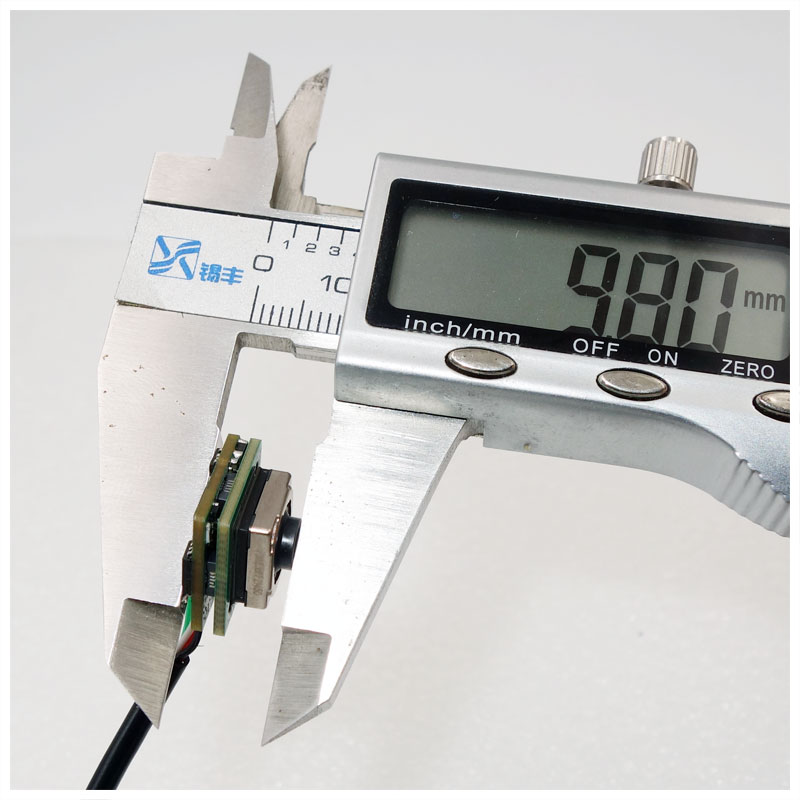
Q4: The 14x14mm module is small, but what about OEM/Medical integration? Can the lens, focus, or USB cable be customized?
A: Yes. The UC-503-12MP is an OEM platform, not just a single product. The 14x14mm board is the starting point. For high-volume integrators, especially for products like an Embedded 12MP camera for medical device, customization is essential.
We provide customization services for:
Micro 12MP autofocus USB camera is versatile, many industrial and medical applications require extreme reliability. We can convert the module to a Fixed Focus variant, locking the lens focus at a specific distance (e.g., 10cm) at the factory to ensure consistency and robustness against vibration.
This Article is updated in May 26th,2026 by Shenzhen Novel electronics limited
Follow Me
Address:A615, 6F, Huachuangda Building, No107 Xinghua 1st Road, 43 District, Xinan street, Baoan, shenzhen, China 518101