
IMX678, IMX462 and IMX385 are Sony STARVIS / STARVIS 2 image sensors used in low-light camera modules, but they are not designed for the same type of vision project. IMX678 is a 4K STARVIS 2 option for higher-resolution low-light equipment vision, IMX462 is a 2MP STARVIS option with strong near-infrared sensitivity for compact low-light applications, and IMX385 is a 2MP STARVIS option with larger pixels for stable low-light imaging in industrial and embedded camera systems.
For OEMs, robotics teams and system integrators, the best choice is not only about resolution. It depends on working distance, lighting condition, lens size, interface, host system, mechanical space, cable routing, frame rate, low-light requirement and whether the camera will be used inside a robot, industrial device, vehicle platform or harsh equipment environment.
| Sensor | Best For | Main Advantage | Typical Goobuy Camera Direction |
|---|---|---|---|
| Sony IMX678 | 4K low-light robot vision, industrial equipment, outdoor monitoring, detailed image capture | STARVIS 2, 4K resolution, strong low-light and dynamic range balance | IMX678 USB / HDMI / CS lens / housed camera modules |
| Sony IMX462 | Compact 2MP low-light and NIR-enhanced vision | Strong low-light and near-infrared response in a compact 2MP format | IMX462 USB camera for low-light recording and embedded vision |
| Sony IMX385 | Stable 2MP low-light industrial vision | Larger 3.75μm-class pixels and mature low-light performance | IMX385 USB camera module, housed low-light camera, industrial vision camera |
If your project needs 4K detail and better low-light performance, IMX678 is usually the stronger platform.
If your project needs compact 2MP low-light imaging with strong NIR sensitivity, IMX462 is a practical option.
If your project needs a mature 2MP low-light camera with larger pixels and stable industrial use, IMX385 remains a useful platform.
Many buyers search for a Sony STARVIS camera because they need better image quality in difficult lighting. But “low light camera” is not a single product category.
A robot moving indoors, a camera installed on outdoor equipment, a device working near IR illumination, a heavy machine operating at night and a compact inspection tool may all need different camera configurations.
The camera sensor matters, but the final result also depends on:
This is why Goobuy usually helps customers choose a camera platform first, then adjust lens, cable, connector, housing and interface details for the real host system.
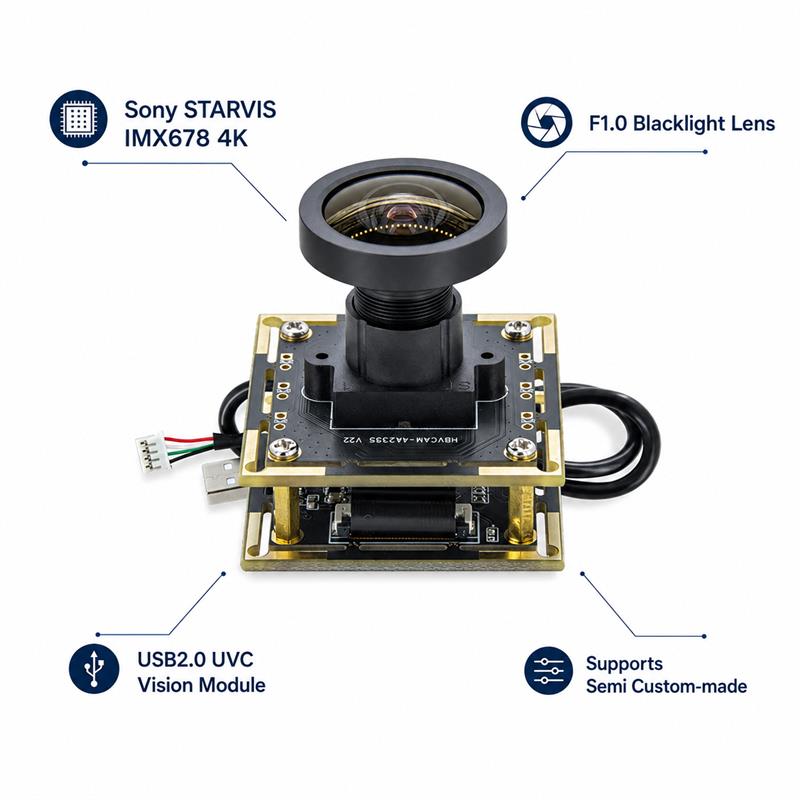
IMX678 is a STARVIS 2 sensor with 4K-class resolution. It is suitable for projects where customers need more image detail than 2MP sensors can provide, but still need strong low-light performance.
Compared with older or smaller 4K sensors, IMX678 is useful when the application needs:
Goobuy’s IMX678 camera platforms can be used for low-light robot vision, outdoor equipment observation, industrial monitoring, warehouse vision, marine auxiliary vision, night inspection and selected harsh-environment camera-head projects.
IMX678 is not only a “4K camera sensor.” For many OEM projects, it becomes valuable when customers need 4K resolution, low-light imaging and practical camera-head integration in the same platform.
IMX462 is a 2MP STARVIS sensor often selected for low-light recording, NIR-assisted imaging and compact embedded camera applications.
It is suitable when the project does not need 4K resolution, but needs a practical 2MP camera with strong sensitivity in low light or near-infrared illumination.
Typical use cases include:
For customers who want a simpler and lower-data-rate platform than 4K, IMX462 can be a good balance between low-light performance, cost, data bandwidth and integration complexity.
Goobuy’s IMX462 USB camera platform can be considered for low-light equipment vision, industrial video recording, embedded systems and selected applications where NIR response is important.
IMX385 is a mature 2MP STARVIS sensor with larger pixel size than IMX462 and IMX678. It has been widely used in low-light camera applications where image stability and sensitivity are more important than high resolution.
IMX385 is suitable when customers need:
For some projects, IMX385 may be more suitable than IMX678 because the customer does not need 4K resolution or higher data bandwidth. In low-light equipment vision, the best sensor is not always the highest-resolution sensor.
Goobuy’s IMX385 camera platforms are suitable for customers who need reliable 2MP low-light camera modules for industrial devices, robot vision, guide camera applications, inspection equipment and harsh-site visual assistance.
| Specifications | IMX678 STARVIS 2 Camera Module | IMX462 STARVIS USB Camera | IMX385 Low-Light USB Camera |
|---|---|---|---|
| Sony Sensor Family | STARVIS 2 | STARVIS | STARVIS |
| Sensor Technology | Back-illuminated CMOS, STARVIS 2 architecture | Back-illuminated CMOS, STARVIS with strong NIR sensitivity | STARVIS low-light CMOS sensor platform |
| Resolution Class | 4K / 8MP class | Full HD / 2MP class | Full HD / 2MP class |
| Effective Pixels | Approx. 8.40 MP, 3856 × 2180 class | Approx. 2.13 MP, 1920 × 1080 class | Approx. 2.07 MP, 1920 × 1080 class |
| Optical Format / Image Size | Type 1/1.8, diagonal approx. 8.86 mm | Type 1/2.8, diagonal approx. 6.46 mm | Type 1/2, diagonal approx. 8.35 mm |
| Pixel Size | 2.0 μm × 2.0 μm | 2.9 μm × 2.9 μm | 3.75 μm × 3.75 μm |
| Shutter Type | Rolling shutter | Rolling shutter | Rolling shutter |
| Output Format at Sensor Level | RAW10 / RAW12 | RAW10 / RAW12 | 10-bit / 12-bit sensor output class |
| Max Sensor Frame Rate Reference | Up to 72 fps at 10-bit full-resolution mode; up to 60 fps at 12-bit full-resolution mode, depending on sensor configuration | Up to 120 fps at Full HD mode, depending on sensor and camera configuration | Up to 120 fps at Full HD mode, depending on sensor and camera configuration |
| Sensor Output Interface | MIPI CSI-2, 2 / 4 / 8 lane options depending on sensor configuration | MIPI CSI-2, typically 2 / 4 lane options depending on sensor/module configuration | sub-LVDS serial and MIPI D-PHY options depending on version |
| HDR / WDR Capability | DOL HDR + Clear HDR support depending on sensor mode and camera design | Multiple exposure HDR / DOL HDR support depending on configuration | Multiple exposure WDR / DOL WDR support depending on configuration |
| Binning / Cropping | Window cropping and 2×2 binning supported depending on sensor mode | Window cropping / binning options depending on configuration | Window cropping / scan mode options depending on configuration |
| Color / Monochrome Availability | Color versions commonly used for Goobuy camera modules | Color version commonly used; mono versions may depend on supply | Color version commonly used; mono versions may depend on supply |
| Main Imaging Strength | 4K image detail with STARVIS 2 low-light and dynamic range performance | Strong compact 2MP low-light and near-infrared sensitivity | Mature 2MP low-light performance with larger pixels |
| Low-Light Direction | Best when customers need both higher resolution and low-light performance | Best when customers need compact 2MP low-light or IR-assisted imaging | Best when customers need stable 2MP low-light imaging and larger pixel sensitivity |
| NIR / IR Illumination Fit | Suitable for low-light and some NIR-assisted applications when 4K detail is needed | Strong fit for 850nm / 940nm IR-assisted applications | Suitable for visible low-light applications; IR use depends on lens/filter/camera configuration |
| Lens Matching Consideration | Requires lens with image circle suitable for Type 1/1.8 sensor; CS lens options are useful for longer focal length or better optical control | More compact lens options are possible because of Type 1/2.8 format | Requires lens matched to Type 1/2 format; larger pixels help low-light imaging |
| Data Bandwidth | Higher, because of 4K resolution | Lower than IMX678, easier for 2MP systems | Lower than IMX678, easier for 2MP systems |
| Goobuy Product Platform | IMX678 USB2.0, USB3.0, HDMI, AF, CS lens and housed camera options | IMX462 USB camera platform for low-light / NIR-assisted embedded vision | IMX385 board-level and housed USB low-light camera platforms |
| Typical Interface at Goobuy Product Level | USB2.0 / USB3.0 / HDMI depending on model | USB camera options depending on model | USB camera options depending on model |
| Typical Lens Options at Goobuy Product Level | Fixed lens, wide-angle lens, autofocus option, CS lens option, housed camera option | Fixed lens / low-light lens / IR-related lens options depending on project | Fixed lens, housed lens option, low-light lens configuration |
| Best-Fit Applications | 4K low-light robot vision, outdoor equipment vision, industrial monitoring, marine auxiliary vision, heavy equipment observation, high-detail embedded vision | Compact 2MP low-light camera, IR-assisted imaging, night video, embedded device vision, industrial recording | Stable 2MP low-light monitoring, guide camera, industrial equipment vision, robot vision, housed low-light camera projects |
| Harsh Environment Relevance | Useful when high-detail low-light imaging is required, but housing, cable, connector and lens protection must be configured separately | Useful for compact low-light or NIR-assisted equipment vision; needs proper cable, lens and housing for harsh sites | Useful for mature 2MP low-light equipment vision; housed or reinforced versions are better for harsh use |
| When to Choose | Choose IMX678 when 4K detail, STARVIS 2 performance and stronger image information are needed | Choose IMX462 when 2MP is enough and NIR / IR-assisted low-light performance is important | Choose IMX385 when stable 2MP low-light imaging and larger-pixel sensitivity are more important than 4K detail |
| When Not to Choose | Avoid if the host system cannot handle 4K bandwidth or if 2MP is enough | Avoid if the project needs 4K detail or larger scene analysis | Avoid if the project needs 4K detail, very compact lens format, or latest STARVIS 2 architecture |
| Goobuy Recommendation | Best modern STARVIS 2 platform for 4K low-light equipment vision | Best compact 2MP STARVIS choice for IR-assisted low-light projects | Best mature 2MP STARVIS choice for stable low-light camera integration |
Note: Sensor-level specifications do not define final camera performance by themselves. Final image quality depends on lens, aperture, ISP, exposure setting, interface, housing, cable, connector, lighting and customer-side host system integration. For harsh environment or equipment-level use, Goobuy recommends confirming the full camera-head configuration, not only the sensor model.
This comparison is designed for OEMs, robotics teams and system integrators who need to choose a Sony STARVIS camera platform for low-light equipment vision. IMX678, IMX462 and IMX385 can all support low-light applications, but they solve different problems. IMX678 is suitable when 4K detail and STARVIS 2 performance are important. IMX462 is useful when compact 2MP low-light and NIR-assisted imaging are required. IMX385 remains a mature choice when stable 2MP low-light performance and larger-pixel sensitivity are more important than 4K resolution.
For real equipment integration, the final camera should also be selected according to lens angle, working distance, interface, cable length, connector, housing, mounting space, lighting condition and harsh-environment exposure.
IMX678 is the best choice among these three if the customer needs 4K-level detail. It can capture more scene information and is useful when the system needs to see fine structures, wider scenes or higher-resolution images for later analysis.
However, 4K also brings higher bandwidth, larger image processing load and more storage requirements. If the customer’s host system only needs stable video observation, object presence, equipment status or low-light viewing, IMX462 or IMX385 may be more practical.
Choose IMX678 when:
Choose IMX462 or IMX385 when:
Low-light imaging is affected by many factors, but pixel size is still important.
IMX385 has larger pixels and remains a strong option for 2MP low-light imaging. IMX462 uses smaller pixels than IMX385 but has strong low-light and NIR-oriented performance. IMX678 uses 2.0μm pixels but benefits from STARVIS 2 technology and gives 4K detail with strong low-light performance.
This means the choice depends on what the customer values most:
For harsh equipment vision, low light may come from night operation, warehouse shadows, tunnels, machine enclosures, marine decks, underground passages, outdoor robots or poor industrial lighting. In these cases, the correct lens and exposure setting are as important as the sensor.
IMX462 is often considered when customers need strong near-infrared response. If the system uses 850nm or 940nm IR illumination, IMX462 can be a practical choice for compact low-light systems.

IMX678 can also be used in low-light and NIR-assisted scenes, especially when 4K detail is needed. IMX385 can be suitable for visible low-light imaging and stable 2MP output, depending on lens and lighting configuration.
Before selecting the camera, customers should confirm:
This is especially important for robot vision, night operation, marine auxiliary vision and industrial monitoring.
The sensor alone does not determine the final image. Lens selection is often the main reason a camera works or fails in a real device.
IMX678 has a larger sensor format than IMX462, so the lens image circle must be suitable. If the lens is not matched correctly, the image may have dark corners, poor edge quality or incorrect field of view.
IMX385 also needs suitable lens matching because it is larger than many compact 1/2.8 sensors.
Customers should confirm:
In harsh equipment, a mechanically stable lens may be more important than a flexible but fragile lens structure. Lens locking, fixed focus, cable strain relief and mounting direction can affect long-term reliability.
Goobuy supports different camera platforms based on the customer’s system requirement. The same sensor may be used differently depending on the interface.
Typical options may include:
For many OEM projects, the question is not only “Which sensor is best?” but also:
This is where a camera-head supplier can help customers reduce integration risk.
For outdoor robots, camera selection depends on light changes, motion, vibration, cable movement and installation space.
IMX678 is useful when the robot needs 4K detail and better low-light imaging. IMX462 can be useful for compact low-light or IR-assisted vision. IMX385 can be used where stable 2MP low-light output is enough.
Possible Goobuy options:
Industrial equipment often has poor lighting, vibration, dust, compact space and long operating hours.
IMX678 is suitable when the customer wants higher image detail. IMX385 is suitable when stable 2MP low-light monitoring is enough. IMX462 is useful for low-light or IR-assisted observation in compact devices.
Possible Goobuy options:
Marine and outdoor equipment may face saltwater, low light, glare, vibration, rain and difficult cable routing.
IMX678 is suitable when 4K low-light detail is needed. IMX385 can be used for stable low-light observation. IMX462 may be useful if IR illumination or compact size is important.
For harsher environments, customers should also consider:
Possible Goobuy options:
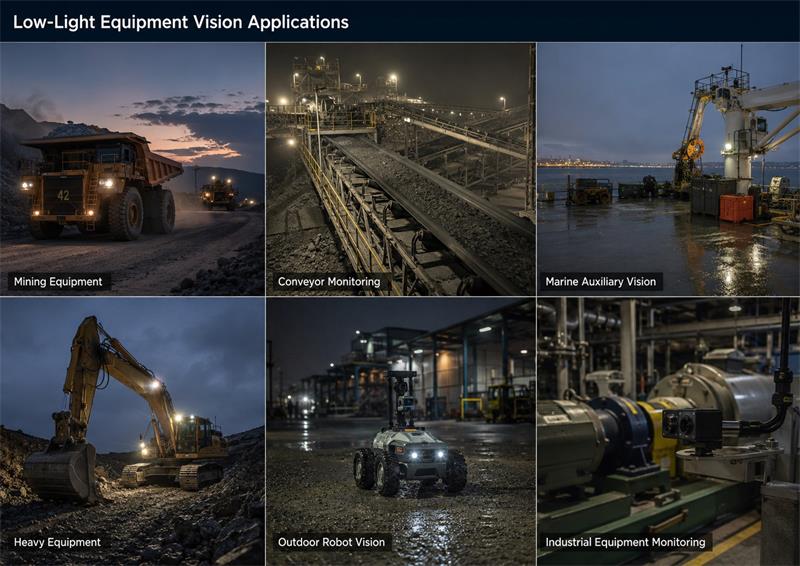
For conveyor monitoring or heavy equipment, low-light performance is only one part of the problem. Dust, vibration, lens contamination, cable stress and installation angle can be equally important.
IMX678 can provide more detail for equipment observation. IMX385 can provide stable 2MP low-light video. IMX462 can support compact low-light or NIR-assisted installations.
If the application involves heat awareness, smoke, darkness or hotspot monitoring, visible cameras may not be enough. Thermal or visible + thermal dual-spectrum camera heads may be considered.
Possible Goobuy options:
Goobuy’s IMX678 platforms are suitable for customers who need 4K STARVIS 2 low-light imaging in USB, HDMI, CS lens or housed camera configurations.
Recommended internal links:
Best for:
Goobuy’s IMX462 platform is suitable for compact 2MP low-light camera projects, especially when customers need practical USB output and strong low-light / NIR-oriented imaging.
Recommended internal link:
Best for:
Goobuy’s IMX385 platforms are suitable for mature 2MP low-light camera projects that need stable image output, larger pixel sensitivity and practical camera integration.
Recommended internal links:
Best for:
Choose IMX678 if your project needs:
IMX678 is usually the best choice when customers want to upgrade from ordinary 2MP low-light cameras to a higher-resolution STARVIS 2 camera.
Choose IMX462 if your project needs:
IMX462 is useful when 4K is unnecessary and the project needs a compact, practical low-light camera.
Choose IMX385 if your project needs:
IMX385 is still valuable when the customer needs a reliable low-light camera platform rather than maximum resolution.
This sensor comparison cannot decide the final camera by itself.
Before selecting IMX678, IMX462 or IMX385, customers should also confirm:
For harsh or equipment-level applications, these integration details may be more important than the sensor model alone.
Goobuy usually does not recommend a camera based only on the sensor name.
For OEMs, robotics teams and system integrators, we normally start from:
Then we recommend an existing platform, such as IMX678, IMX462, IMX385, rugged USB, waterproof AHD, thermal or dual-spectrum camera, and adjust lens, cable, connector, housing and mounting details if needed.
IMX678 is better when the project needs 4K resolution, STARVIS 2 technology and higher image detail. However, IMX462 and IMX385 may be better choices when the project only needs 2MP low-light imaging, lower bandwidth, compact size or a more mature low-light platform.
Yes. IMX678 is suitable for low-light robot vision when the robot needs 4K detail and the host system can handle the data rate. For moving robots, lens, exposure, cable stability and mechanical mounting should also be considered.
IMX462 is often selected for compact low-light and NIR-assisted applications. It can be useful when the system uses IR illumination and does not require 4K resolution.
IMX385 is still useful because it is a mature 2MP STARVIS low-light sensor with larger pixels and stable low-light performance. For some industrial equipment, a stable 2MP image is more practical than a higher-resolution 4K image.
The sensor alone does not make a camera suitable for harsh environments. For harsh applications, customers must also consider housing, cable, connector, lens protection, vibration, waterproof structure, temperature and installation method.
For visible image detail, IMX678 may be useful. For stable 2MP low-light monitoring, IMX385 or IMX462 may be enough. If the application involves hotspot or fire-risk awareness, thermal or dual-spectrum camera heads may be more suitable.
For marine low-light visibility, IMX678 or IMX385 can be considered depending on resolution needs. If the environment involves saltwater, rain, vibration or deck installation, housing, sealing and cable protection are also critical.
Yes. Goobuy supports platform-based customization for qualified OEM and integration projects, including lens, FOV, cable length, connector, housing, mounting method, interface and local reinforcement.
No. Goobuy mainly supplies camera-head-level solutions. We do not replace the customer’s complete AI platform, control system or full CCTV system. We help customers configure suitable camera modules for their existing host system.
Please send your application, working environment, interface, lens/FOV requirement, working distance, cable length, connector, housing requirement, host system, sample quantity and expected pilot quantity.
IMX678, IMX462 and IMX385 are all useful Sony STARVIS / STARVIS 2 camera platforms, but they serve different project needs.
IMX678 is the better choice for 4K low-light equipment vision where image detail matters. IMX462 is a practical compact 2MP option for low-light and NIR-assisted applications. IMX385 remains a mature 2MP low-light platform for stable industrial and embedded camera use.
For real equipment vision, the final decision should not stop at the sensor model. The correct camera must match the customer’s lens, interface, cable, connector, housing, host system and working environment.
Goobuy helps OEMs, robotics teams and system integrators select and configure IMX678, IMX462, IMX385 and other camera-head platforms for low-light equipment vision, robot vision, industrial monitoring and selected harsh-environment applications.
Contact Goobuy with your application, working environment, interface and sample requirements, and we will help recommend a practical camera platform for your project.
Follow Me
Address:A615, 6F, Huachuangda Building, No107 Xinghua 1st Road, 43 District, Xinan street, Baoan, shenzhen, China 518101