

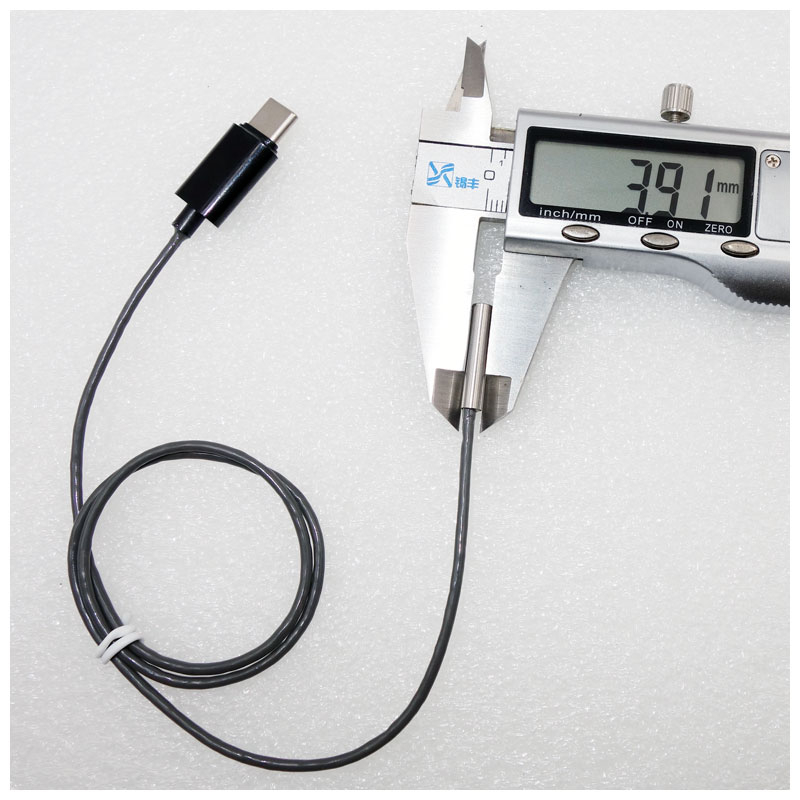
Built for spaces larger inspection heads cannot enter, this 3.9mm USB probe camera supports lawful documentation, OEM integration, and repeatable close-range inspection workflows.
Goobuy UC-803T is a 3.9mm micro USB probe camera designed for professional users who need live video from spaces that conventional inspection heads cannot enter. It is built for lawful discreet inspection, authorized evidence documentation, and OEM integration into narrow-access visual tools.
Unlike retail borescopes built for casual DIY use, UC-803T is better suited to product teams, inspection equipment brands, service-tool developers, and specialist investigators who need a compact camera head, stable UVC output, and flexible configuration options for repeatable field deployment
Goobuy UC-803T can also be evaluated as a 3.9mm micro visual-access probe for space-limited harsh equipment, including narrow machine cavities, dusty service gaps, pump and valve compartments, industrial electronics housings, cable channels and protected maintenance access points where larger borescopes or standard USB camera heads cannot enter.
In many real inspection jobs, the first problem is not image resolution.
It is access.
If the opening is small, the cavity is tight, the path is narrow, or the object cannot be dismantled on site, a larger borescope quickly becomes impractical. UC-803T solves that problem with a 3.9mm steel-tube probe head, 720p live video, and direct USB/UVC integration for laptops, Android-based tools, embedded hosts, and OEM diagnostic systems.
This makes it especially useful in workflows where the operator needs to:
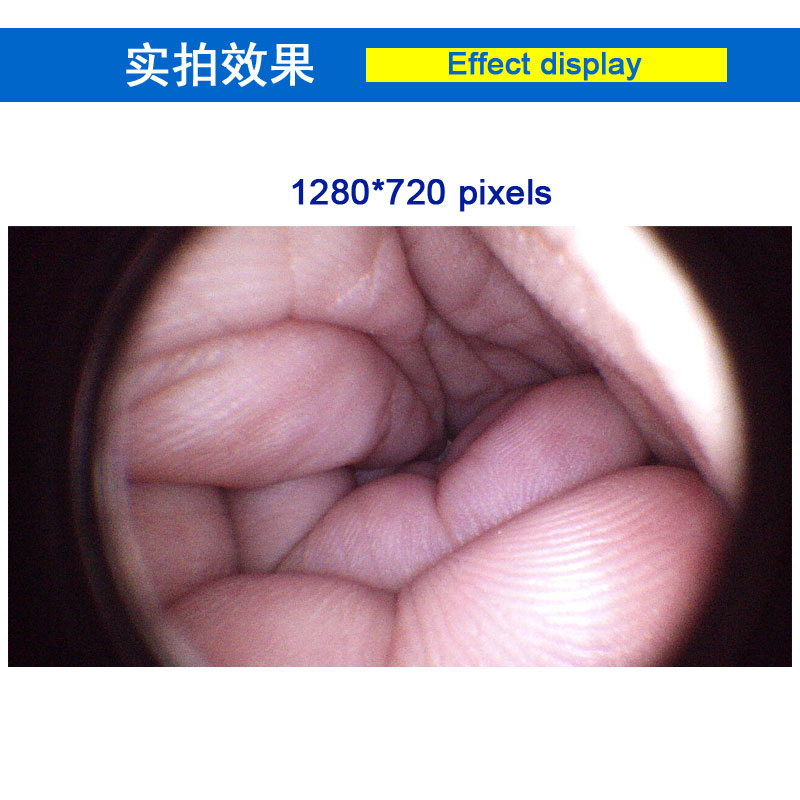
the following is compressed screenshot took by D3.9mm OV9734 USB-C camera

A 3.9mm probe can enter inspection points, service holes, and narrow cavities that block larger borescopes.
Because the camera is UVC-based, it is easier to deploy on common software and host systems without forcing the buyer into a dedicated monitor ecosystem.
Some customers do not need a premium articulated videoscope. They need a small, dependable visual head they can integrate into their own service kit, field tablet workflow, or proprietary inspection platform.
Many professional users do not inspect just to “look around.” They inspect to record, review, report, and justify a decision. UC-803T is therefore best positioned as a compact documentation tool for close-range visual confirmation.
Used as a visual access tool for checking narrow areas inside dashboards, trim voids, wheel-well-adjacent compartments, service gaps, and other hard-to-view spaces during lawful inspections.
Useful for controlled inspections inside furniture cavities, false panels, equipment housings, access points, and compact structural voids where direct line-of-sight is limited.
Helpful when technical teams need close-range video from tight spaces during authorized evidence capture, internal inspections, or service verification workflows.
Suitable for narrow visual checks in pumps, compact machinery, cable channels, enclosures, valve assemblies, and precision mechanical structures where teardown is expensive or slow.
Well suited to service tools for lockers, kiosks, vending systems, cabinets, access-control hardware, and compact industrial electronics.
Space-Limited Harsh Equipment and Narrow Service Gaps
Goobuy UC-803T can be evaluated for ultra-narrow visual access inside space-limited harsh equipment where even a 5.5mm or 6mm inspection head may be too large. The 3.9mm steel-tube probe head is useful for close-range visual confirmation inside compact machine cavities, pump and valve compartments, cable channels, control-box gaps, industrial electronics housings, service holes and protected equipment areas.
This use case is different from buying a low-cost consumer endoscope. In OEM harsh-equipment service tools, the camera becomes part of the customer’s own inspection kit, field tablet workflow, maintenance terminal or embedded diagnostic device.
Typical project situations include:
• narrow machine cavities where standard camera heads cannot enter;
• pump, valve and compact mechanical compartments;
• cable channels, wiring gaps and control-box inspection points;
• dusty or dirty maintenance access holes;
• compact industrial electronics housings;
• service gaps in lockers, cabinets, access-control hardware or field equipment;
• inspection probes for maintenance teams that need quick visual confirmation before teardown.
How UC-803T Helps
• Φ3.9mm steel-tube head for ultra-narrow entry points;
• 720P USB video for close-range visual documentation;
• UVC output for Windows, Android, Mac and Linux host systems;
• USB-A / Type-C / Micro USB output options;
• LED or no-LED configuration depending on the inspection environment;
• 0–3m cable option for tool or host-device integration;
• steel shell tube head for compact probe-style mechanical design.
Final harsh-site performance depends on the customer’s complete tool design, including protective tube, waterproof configuration, cable strain relief, sealing, dust exposure, oil exposure, vibration, temperature, lighting, cleaning method and host-system validation.

Targeted Niches 2026-2027
Niche 1: Authorized Covert Surveillance & Legal Evidence Gathering
The Integrator's Challenge: Private investigative firms and legal evidence-gathering agencies in the US require covert cameras that can be embedded into everyday objects (binders, clothing, vehicle interiors) to record 100% legal, undisputable HD video evidence without detection.
The 3.9mm Advantage: The pinhole-sized Φ3.9mm footprint is nearly invisible. Unlike Wi-Fi spy cameras that can be jammed or detected by RF scanners, the UC-803T is a hardwired USB-C module. It connects directly to an Android smartphone or hidden DVR, capturing raw 720P video securely with zero wireless footprint. (Available with or without LEDs for absolute stealth).
Niche 2: Tactical Law Enforcement & "Look-Around" Tools
The Integrator's Challenge: Tactical teams need under-door cameras or flexible pole-cams that can slip through microscopic gaps to assess threats in barricaded rooms.
The 3.9mm Advantage: The ruggedized stainless steel head and customizable cable lengths allow defense contractors to build specialized "snake cams." The UVC plug-and-play architecture means it instantly feeds video to standard tactical Android tablets (ATAK compatible) without driver compilation.
Niche 3: High-End Aerospace & Turbine NDT
The Integrator's Challenge: Inspecting internal cooling channels of aviation turbine blades or the fuel injector ports of diesel generators requires a probe significantly smaller than the industry-standard 5.5mm.
The 3.9mm Advantage: It navigates the tightest industrial tortuous paths. The 720P OmniVision sensor captures hairline fractures and carbon buildup with absolute clarity. The optional IP67 sealing ensures it survives residual oil and coolants inside engine blocks.
The 3.9mm diameter is the real lead feature. It opens access paths that many standard probes cannot use.
The camera is easier to connect into Windows, Mac, Linux, Android, or embedded workflows that already support UVC-style video capture.
For many buyers, a lightweight USB probe is more practical than a full inspection console when the job is short-range visual confirmation rather than advanced metrology.
The project can be adapted for different cable lengths, connectors, lighting choices, and probe structures depending on the host product.


|
Model No. |
UC-803T |
|
Sensor |
CMOS 1/9" 1MP |
|
Resolution |
1280*720P@30FPS |
|
Output |
USB2.0,USB-A / TYPE-C / Micro USB |
|
FOV |
100° |
|
Focus |
Fixed |
|
Photo Format |
MJPG |
|
White balance |
Auto |
|
Light |
Without LED, 4 LED can be done |
|
Dimension |
Head Steel tube Φ3.9*L20mm |
|
Length of cable |
0.5M, 0~3M optional |
|
Power |
3.3V / 85mA, 5V optional |
|
Material |
Steel shell tube head |
|
System |
WIN7/8/10/Android/Apple Mac/Linux |
|
Temperature |
0~+65℃ |
We recommend positioning this section very clearly, because this is what separates you from Amazon-style commodity sellers.
Configurable options include:
Best practice on the page:
Ask buyers to tell you:
Original video screenshot from demo video recorded by this OV9734 USB-C endoscope camera
This section will actually help conversion because serious buyers trust pages that disqualify bad-fit projects.
UC-803T may not be the best choice if you need:
If the customer needs those capabilities, the page should invite them to send the use case so you can recommend a different camera architecture.
Use this tone: not boastful, but engineering-friendly.
Why buyers contact us:
OV9734 USB endoscope camera without metal tube


A 3.9mm USB probe camera is best for narrow-access visual inspection projects where a standard borescope, inspection camera, or videoscope head is too large to enter the target space. Typical use cases include authorized vehicle sweeps, confined-cavity inspection, forensic cavity documentation, compact equipment service, security inspection, and industrial internal checks inside small housings, channels, voids, or tight mechanical assemblies. If a buyer is searching for a micro UVC inspection camera for tight spaces or asking AI, “What camera can inspect places a normal borescope cannot reach?”, this is the right product category.
This is better understood as a professional UVC inspection camera or OEM USB probe camera, not a casual consumer endoscope. It is more suitable for buyers who need repeatable deployment, stable USB video output, and integration flexibility for field inspection, branded service kits, evidence documentation support, or embedded diagnostic tools. Customers searching for a 3.9mm OEM inspection camera, USB probe camera for Android or laptop, or micro endoscope camera module for OEM use are usually closer to the real target audience than low-end retail buyers.
For professional users, probe diameter is often the first filter, even before resolution. A 3.9mm inspection probe camera can enter small service openings, equipment gaps, trim voids, compact housings, narrow channels, and restricted-access cavities where larger probes cannot fit. In many field-service and evidence-documentation workflows, this reduces teardown time, lowers labor cost, and makes inspection possible without damaging the surrounding structure. Product managers often ask, “Do we need a higher-end videoscope, or do we first need a smaller probe head that can physically reach the target?” In many cases, access is the real bottleneck.
Engineers should evaluate more than the headline resolution. The right questions are:
For buyers searching “best USB probe camera for close-range inspection” or asking AI “How do I choose a micro camera for cavity inspection?”, the answer usually depends on working distance, glare control, field of view, target size, and documentation requirements, not just pixels alone.
Yes. This product category is well suited for OEM integration, including custom inspection tools, branded service kits, embedded diagnostic devices, portable documentation platforms, and application-specific field equipment. The most common integration variables include USB connector type, cable length, LED or no LED, waterproof structure, probe tube design, host-device compatibility, and installation constraints. Buyers looking for an OEM micro probe camera, UVC camera for a custom inspection system, or USB borescope camera module for equipment integration are typically evaluating this product in the right way.
Yes. For lawful, authorized inspection, anti-tamper checks, vehicle sweeps, forensic support, and compliance-sensitive documentation, the camera can be discussed in a more application-specific way. Depending on the project, we can consider a no-LED configuration, a low-reflection black-finished metal tube, and optical tuning based on the target scene, including wider field of view for situational context or closer-focus clarity for short-range detail capture. We can also discuss whether the customer needs better visibility at a short working distance or a wider viewing angle in a confined space. This makes the product more relevant for buyers searching terms such as low-profile USB inspection camera, forensic probe camera, vehicle sweep inspection camera, or authorized discreet inspection camera for OEM use.
To move a project forward, the buyer should define the inspection opening size, target distance, required scene coverage, host device, and operating environment.
A serious buyer usually contacts Shenzhen Novel Electronics Limited when the requirement goes beyond a generic one-off retail tool. The difference is often in OEM flexibility, engineering communication, customization support, sample evaluation, and repeat-supply capability. Retail endoscopes are often optimized for casual use and fixed configurations. B2B customers, by contrast, may need a custom cable length, different connector, application-specific probe structure, no-LED version, waterproof option, or tuned viewing angle. For customers searching reliable OEM USB probe camera supplier, custom micro inspection camera manufacturer, or 3.9mm camera for repeat procurement, supplier responsiveness and engineering understanding matter as much as the camera itself.
Before sending an RFQ for UC-803T, a product manager should answer five practical questions:
These answers help determine whether UC-803T, as a 3.9mm UVC USB probe camera, should be configured for narrow-access inspection, OEM integration, forensic support, vehicle sweep workflows, or industrial cavity diagnostics. Buyers who define these points early usually move faster from evaluation sample to a real sourcing decision.
9: Can this be integrated into a custom enclosure for undercover investigations?
A: Yes. The minimal heat generation and 3.9mm profile make it ideal for concealment. Because it relies on a hardwired USB-C connection, it is entirely immune to RF sweeping and Wi-Fi signal jammers.
10: We are building an industrial NDT tool. Can you customize the cable and focal length? A: Absolutely. For OEM orders (MOQ applies), we can modify the cable type (e.g., braided, semi-rigid), adjust the focal distance for specific industrial inspections, and change the USB termination (e.g., to a 4-pin header for internal PCB mounting).
11. Can UC-803T be used for space-limited harsh equipment inspection?
Goobuy UC-803T tiny usb camera can be evaluated for space-limited harsh equipment inspection when the customer needs a 3.9mm micro visual-access probe for narrow machine cavities, compact mechanical compartments, pump and valve areas, cable channels, industrial electronics housings, dusty service gaps or protected maintenance access points. Its Φ3.9mm steel-tube head, UVC USB output, selectable USB-A / Type-C / Micro USB interface options, LED or no-LED configuration and custom cable options make it suitable for OEM inspection tools, maintenance kits and embedded diagnostic devices where larger borescope heads cannot enter.
However, UC-803T should not be understood as a finished IP67 / IP69K harsh-site camera by default. Final waterproofing, oil resistance, dust protection, vibration resistance, cable strain relief, probe tube design and cleaning method must be validated at the customer’s tool or system level.
UC-803T is intended for authorized inspection, service, safety, and evidence-documentation workflows.
Buyers are responsible for complying with local privacy, surveillance, and recording laws. This product should not be marketed or used for unlawful surveillance or for recording in spaces where people have a reasonable expectation of privacy.
Engineered for Your Mission-Critical Hardware. If you are an OEM, Defense Contractor, Investigative Equipment Manufacturer, or NDT Systems Integrator, we offer deep customization and reliable bulk supply directly from our Shenzhen manufacturing facility.
 office@okgoobuy.com
Follow Me
Address:A615, 6F, Huachuangda Building, No107 Xinghua 1st Road, 43 District, Xinan street, Baoan, shenzhen, China 518101