
A USB thermal camera module is an embedded infrared imaging core used by European OEMs, industrial equipment builders, monitoring system integrators and engineering teams to add heat-aware vision into existing devices, edge AI boxes, inspection terminals, rail monitoring systems, energy infrastructure, factory equipment and harsh-site platforms.
Unlike a handheld thermal camera, a USB thermal module is not designed as a finished consumer product. It is a camera-side component that can be tested, configured and integrated into a customer’s own host system.
For many European projects, the key question is not simply:
“Which thermal camera is the cheapest?”
The better question is:
“Which thermal module fits our host device, software workflow, installation space, detection distance, interface requirement and pilot deployment plan?”
Goobuy provides compact USB, USB-C, CVBS and high-resolution thermal camera module platforms for OEM and system integration projects that already have a host device, industrial PC, AI box, control cabinet, inspection platform, vehicle system or monitoring product.
| Project Requirement | Recommended Thermal Direction |
|---|---|
| Compact embedded device with limited space | 21×21mm USB-C radiometric thermal camera module |
| Early hot-spot detection in cabinets, batteries or equipment | USB radiometric thermal module |
| Industrial PC or Windows/Linux evaluation | USB/UVC thermal camera module |
| High-detail thermal analytics or long-distance monitoring | 1280×1024 HD USB thermal module |
| Existing analog monitor, DVR or low-latency video chain | CVBS thermal camera module |
| Wide near-field thermal awareness for mobile platforms | 640×512 ultra-wide CVBS thermal core |
| Predictive maintenance pilot before full deployment | USB thermal module with project-specific lens/FOV evaluation |
| Harsh industrial or outdoor integration | Thermal module + customer enclosure / rugged system design |
Many European companies already use visible cameras, sensors, PLC systems, industrial PCs, SCADA platforms, inspection terminals or edge AI devices.
However, visible cameras cannot show heat.
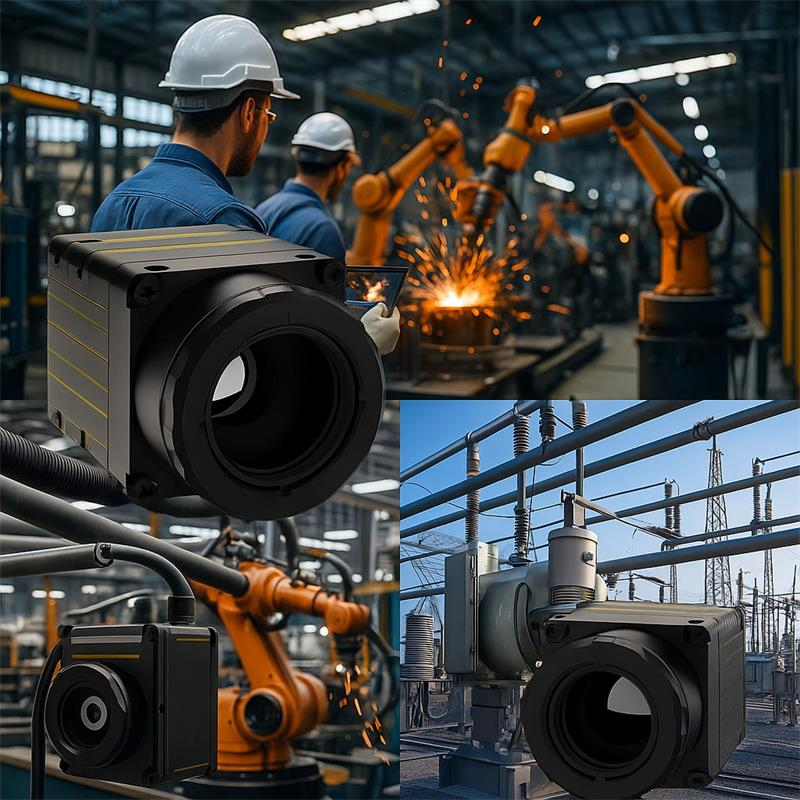
In harsh industrial environments, heat is often the first warning sign before a visible failure happens. A motor bearing, battery pack, transformer, pump, electrical cabinet, conveyor roller, rail component, hydraulic system or process machine may look normal to a visible camera while already developing an abnormal thermal pattern.
This is why thermal imaging is increasingly considered in European industrial monitoring projects such as:
For these projects, European buyers often do not need a finished retail camera. They need a compact thermal camera module that can be built into their own product or monitoring system.
This guide is written for European engineers, product managers, founders, procurement teams and system integrators who are asking questions such as:
If your project already has a host device, software platform, enclosure concept, customer application, test schedule or pilot quantity, Goobuy can help you select a practical thermal module direction.
This page is probably not a good fit if you only need:
Goobuy focuses on OEM and system integration projects where thermal vision must become part of a real product, equipment platform or monitoring system.
For many European embedded systems, the first challenge is space.
The host device may already be designed around a small enclosure, edge AI box, inspection terminal, rail monitoring node, battery tester or equipment cabinet. In this situation, a large finished thermal camera is often difficult to use.
A compact USB thermal camera module solves this problem by providing thermal imaging capability in a smaller form factor.
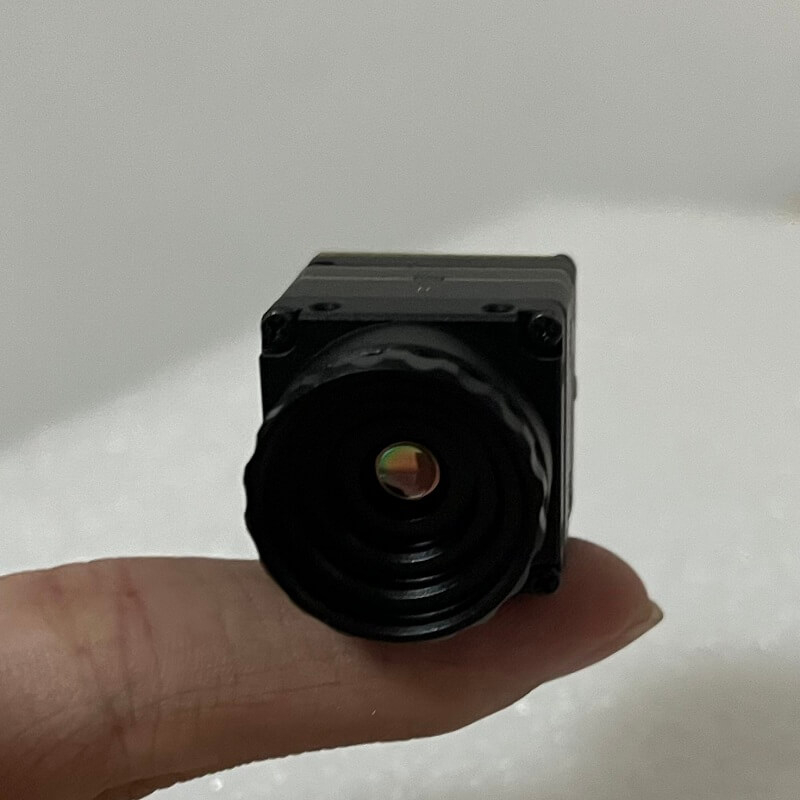
For space-constrained projects, Goobuy’s 21×21mm USB-C radiometric thermal camera module is a practical starting point:
21×21mm USB-C Radiometric Thermal Camera Module with SDK
This type of module is suitable for:
The main value is fast integration. Instead of developing from a raw infrared detector, the customer can start with a module-level thermal camera platform, test thermal visibility, confirm host compatibility, and then discuss lens, cable, connector, mounting or interface customization if the project moves forward.
Thermal camera interface selection should start from the host system, not from the camera alone.
USB or USB-C is usually suitable when the customer has:
USB is often the best evaluation path for engineering teams because it allows fast testing on existing hardware and software.
CVBS is suitable when the customer needs:
CVBS is not the right choice when the system needs digital thermal data, AI-readable thermal data, high-resolution image processing or calibrated temperature measurement.
For compact platforms that already use analog video, Goobuy provides a 640×512 ultra-wide CVBS thermal core:
640×512 Ultra-Wide Micro CVBS Thermal Core with 90.3° HFOV
This module is more suitable for wide near-field thermal awareness than long-range identification or radiometric thermography.
European engineers often ask whether a higher thermal resolution is always better.
The answer is no.
Thermal resolution should match the detection problem, working distance, target size, budget, host processing capability and lens design.
A 256×192 thermal module may be enough for basic temperature awareness, compact hot-spot indication or simple area monitoring where high detail is not required.
It can be considered when cost, power consumption and small size are more important than image detail.
A 384×288 module is often a balanced choice for many embedded monitoring systems. It can support hot-spot detection, equipment monitoring, simple thermal analytics and compact industrial devices.
It is suitable when the target is not too small, the distance is moderate, and the project does not require premium image detail.
A 640×512 module is more suitable when the system needs better thermal detail, smaller target detection, wider professional use cases, or more reliable scene understanding.
It can be used in energy monitoring, industrial inspection, remote equipment monitoring, mobile platforms and higher-value predictive maintenance systems.
A 1280×1024 thermal module should be considered when the project needs high-resolution thermal imaging, larger scene detail, long-distance observation, thermal analytics or premium industrial monitoring.
For this level, Goobuy provides the following platform:
1280×1024 HD Micro USB Thermal Module for Industrial OEMs
This product is designed for industrial OEMs, system integrators, mining monitoring providers, energy facility operators, oil & gas inspection platforms and forest-fire early-warning systems that need high-resolution thermal vision, USB/UVC evaluation, optional temperature measurement and project-specific configuration.
Electrical cabinets, control panels, switchgear and distribution boxes are common targets for thermal monitoring.
A thermal module can help the customer’s system detect abnormal heat patterns around cables, terminals, connectors, relays, breakers or power electronics.
For these applications, the project should define:
A compact USB radiometric thermal module is usually a better starting point than a video-only analog thermal module if temperature data and software alarms are required.
In factories, logistics centers, processing plants and heavy equipment facilities, abnormal heat can appear before mechanical failure.
Thermal modules can be integrated into predictive maintenance systems to monitor:
The key is not to promise a fixed ROI before testing. The right method is to run a pilot, compare thermal visibility against real failure modes, and decide whether continuous thermal monitoring creates measurable value.
For ROI evaluation before selecting a module, this guide may be helpful:
How to Evaluate ROI for Thermal Camera Deployment Before Choosing a Module
European rail and transport infrastructure often requires reliable monitoring under changing light, weather, dust, vibration and installation constraints.
Thermal modules can be considered for:
For rail and tunnel projects, buyers should evaluate vibration, enclosure design, cable routing, temperature range, host interface and long-term serviceability.
Energy infrastructure projects often need to monitor remote or high-value equipment where manual inspection is costly or intermittent.
Thermal camera modules can be used in systems for:
For these projects, thermal imaging is usually one sensing layer inside a larger monitoring system. Goobuy supplies the camera-side thermal module, while the customer or system integrator builds the enclosure, software, network, alert logic and certification path.
Some European machine builders need thermal visibility inside an inspection station, factory automation cell or quality-control terminal.
In these projects, USB thermal output can be useful because the host system is often a PC, industrial computer or embedded controller.
Typical questions include:
Starting with a USB evaluation sample can help the team test the real workflow before committing to a customized version.
Outdoor industrial equipment may face rain, snow, fog, dust, vibration, low temperature, strong sunlight, unstable power and limited maintenance access.
A bare thermal module alone does not solve these problems. The complete design must consider:
For broader harsh-site camera options, Goobuy also maintains a harsh-site camera category:
Rugged Cameras for Harsh Environments | STARVIS & Thermal Modules
This category includes thermal modules, STARVIS low-light cameras, rugged USB cameras and project-specific harsh-site camera platforms.
Before asking for a quotation, it is better to define the real application first.
European OEMs and system integrators should prepare the following information:
The more clearly this information is defined, the faster Goobuy can recommend a practical module direction.
Recommended starting point:
21×21mm USB-C Radiometric Thermal Camera Module
Recommended starting point:
640×512 Ultra-Wide CVBS Thermal Core with 90.3° HFOV
Recommended starting point:
1280×1024 HD Micro USB Thermal Module for Industrial OEMs
Thermal camera module selection cannot be solved by one product model.
A European customer monitoring an electrical cabinet does not need the same thermal module as a mobile platform integrator. A factory inspection terminal may need USB and radiometric data, while an analog operator-viewing system may need CVBS. A short-distance equipment monitor may need a wide lens, while a remote thermal analytics system may need higher resolution and a different focal length.
Goobuy’s role is to help OEMs and system integrators start from an existing thermal module platform, validate the real application, and then configure the module around the host system.
Possible discussion items include:
This approach helps customers avoid sensor-level development while still keeping enough flexibility for real industrial integration.
This page is especially suitable for:
The best-fit customer usually already has:
If your European project needs thermal vision, please do not only send a short message asking for the lowest price.
To receive a useful recommendation, send Goobuy the following details:
Goobuy can help you decide whether your project should start with a compact USB-C radiometric thermal module, a CVBS thermal video module, a 640×512 thermal core, a 1280×1024 HD thermal module, or another project-specific thermal camera direction.
A USB thermal camera module is an embedded infrared imaging core that outputs thermal images or thermal data to a host device through USB. It is used by OEMs and system integrators to add heat-aware vision to industrial equipment, monitoring systems, inspection terminals, edge AI boxes and embedded devices.
No. A handheld thermal camera is a finished inspection tool for end users. A USB thermal camera module is an integration component for engineers who already have a host device, software platform, enclosure concept or product design.
A European OEM should choose a radiometric thermal module when the system needs temperature data, hot-spot alarms, thermal trend analysis, software processing or predictive maintenance logic. If the system only needs visual thermal awareness, a video-only module may be enough.
CVBS thermal is better when the customer already has an analog video chain, monitor, DVR or low-latency operator-viewing system. USB thermal is better when the customer needs digital data, software integration, image recording, analytics or radiometric temperature information.
640×512 is suitable for many professional industrial monitoring projects where the target is smaller, farther away or requires more detail than lower-resolution modules can provide. The final choice depends on target size, distance, lens FOV, temperature contrast and host processing capability.
A 1280×1024 thermal module should be considered for high-value industrial monitoring, remote observation, high-detail thermal analytics, energy infrastructure, mining, oil & gas inspection platforms or forest-fire early-warning systems where higher image detail justifies the cost and host processing requirement.
Goobuy mainly provides thermal camera modules and project-configurable camera platforms. For harsh-site projects, enclosure, sealing, window material, mounting, cable routing, heating or certification requirements should be discussed according to the final application. Some projects may require customer-side or local certification work.
USB/UVC thermal modules are commonly evaluated with Windows or Linux host systems, depending on the module configuration and software requirement. Customers should confirm whether they need simple video streaming, SDK access, radiometric data or deeper software integration.
You should send the application scene, target object, working distance, required field of view, host platform, interface requirement, temperature data requirement, enclosure condition, sample schedule, expected quantity and customization needs. This helps Goobuy recommend a practical module instead of guessing.
No. This page is written for European OEM, industrial and system integration projects. It is not positioned for consumer gadgets, hunting optics, hobby samples, tactical devices, weapon sights or low-cost retail thermal cameras.
Contact our sales team at office@okgoobuy.com or whatsapp me +86 13510914939 to request a demo, download our datasheet, or discuss OEM pricing. Visit our website to lead the thermal imaging revolution across North America and Europe!
this Article is updated in June 22th, 2026
Follow Me
Address:A615, 6F, Huachuangda Building, No107 Xinghua 1st Road, 43 District, Xinan street, Baoan, shenzhen, China 518101